Real places you can visit and real objects you can see in museums, connected to 1 Kings, the first part of 2 Kings and 2 Chronicles: King Solomon and the temple, the split into two kingdoms, and the days of Ahab, Elijah and Jehu. Each one is marked honestly, so you can tell solid evidence from tradition and from claims that are still argued over.
ConfirmedThe place or object is real and is clearly the one the Bible names. For a written object, such as an inscription or a scroll, it means the object is genuine and its words are read with confidence, not that every event it mentions is proven.11
Traditional siteA real place that long tradition links to the Bible, but the exact spot cannot be proven.1
DisputedInformed people disagree, or the claim rests on weak evidence.5
BackgroundShows the world the Bible describes, but does not name a Bible person or event.1
Solomon and the Temple
1
The Gihon spring, where Solomon was anointed
1 Kings 1:33 · 1 Kings 1:38-39 · 1 Kings 1:45
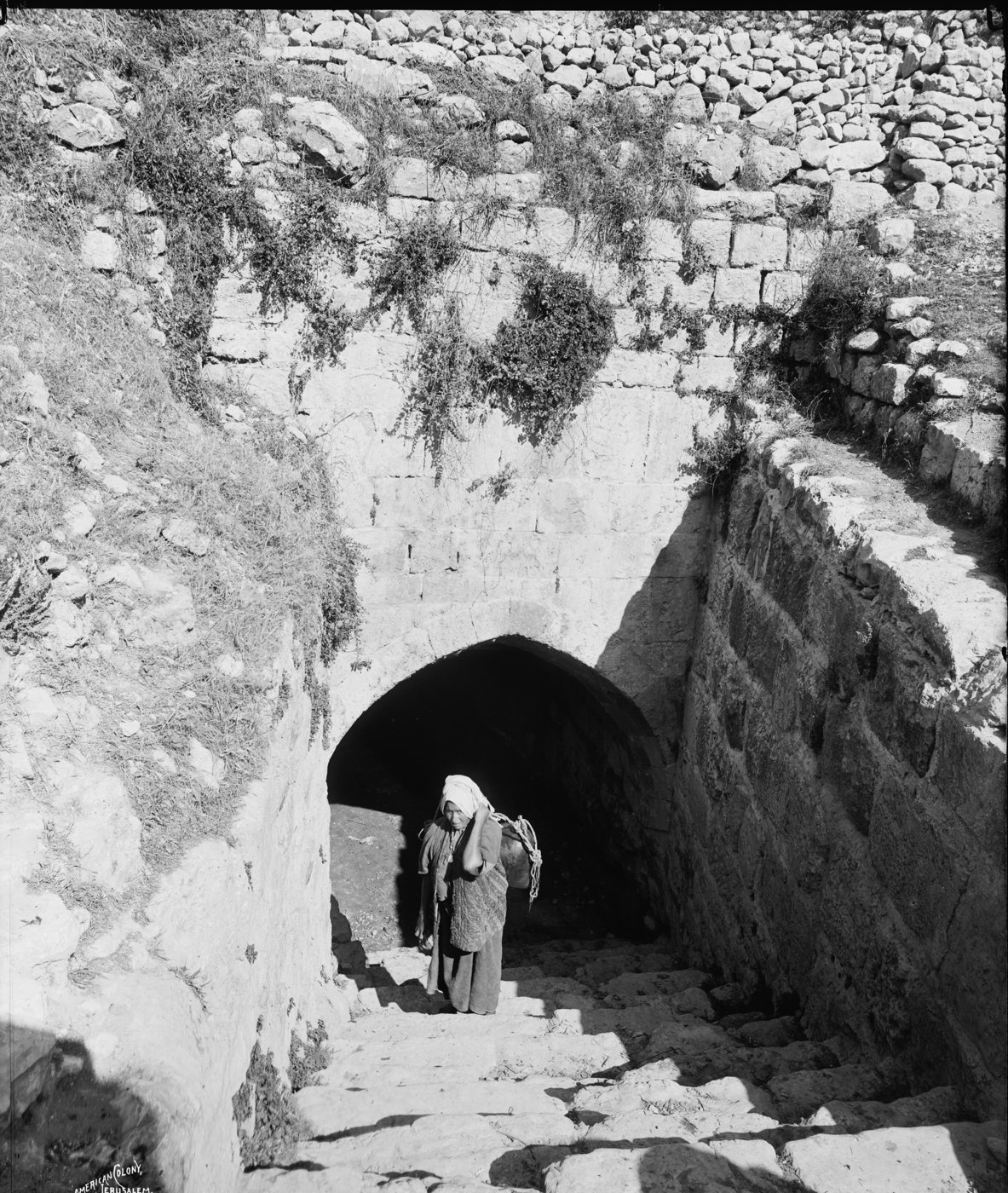
ConfirmedSteps down to the Gihon spring, then called the Virgin's Fountain, with a woman carrying water up the steps, photographed between 1898 and 1914. American Colony, Jerusalem (photographers). G. Eric and Edith Matson Photograph Collection, Library of Congress Prints and Photographs Division, LC-DIG-matpc-06742, No known restrictions on publication (Library of Congress statement).
And Zadok the priest and Nathan the prophet have anointed him king in Gihon: and they are come up from thence rejoicing, so that the city rang again. This is the noise that ye have heard.
1 Kings 1:45, KJV
Near the end of his life, King David ordered Zadok the priest, Nathan the prophet and Benaiah to take Solomon down to Gihon on David's own mule and anoint him king there (1 Kings 1:33-45). The Gihon spring rises in a cave on the eastern slope of the City of David, above the Kidron Valley. It was the early city's main water supply, and it is the main reason the first town grew up on that ridge. The Bible names it again when it describes Hezekiah's water works (2 Chronicles 32:30).
Where it is today
City of David archaeological park, Jerusalem. The spring is at the start of Hezekiah's tunnel.
Date
A natural spring, used from the Bronze Age to today.
Why this label: 2 Chronicles 33:14 says King Manasseh built a wall outside the City of David "on the west side of Gihon, in the valley". So Gihon lay in the valley, east of that wall, and this spring is in that position. Scholars broadly agree on the identification, though no ancient inscription naming it has been found at the spring.
Good to know
The name: Gihon is thought to come from a Hebrew word meaning "gushing forth". Before modern pumping lowered the water underground, the spring flowed in bursts, several times a day in winter and less often in summer. Water is thought to collect in a space underground and then empty all at once. It has also been called the Virgin's Fountain, from a later Christian legend that Mary washed the baby Jesus' clothes there.
Two springs: In the same chapter, Adonijah held his rival feast at another spring, En-rogel (1 Kings 1:9).
Same spring: Warren's Shaft and the spring tower (on the Samuel page) and Hezekiah's tunnel (a later page) were all built to reach the water of this spring.
Not the Eden river: The Gihon spring is not the river Gihon of Genesis 2:13, which only shares the name.
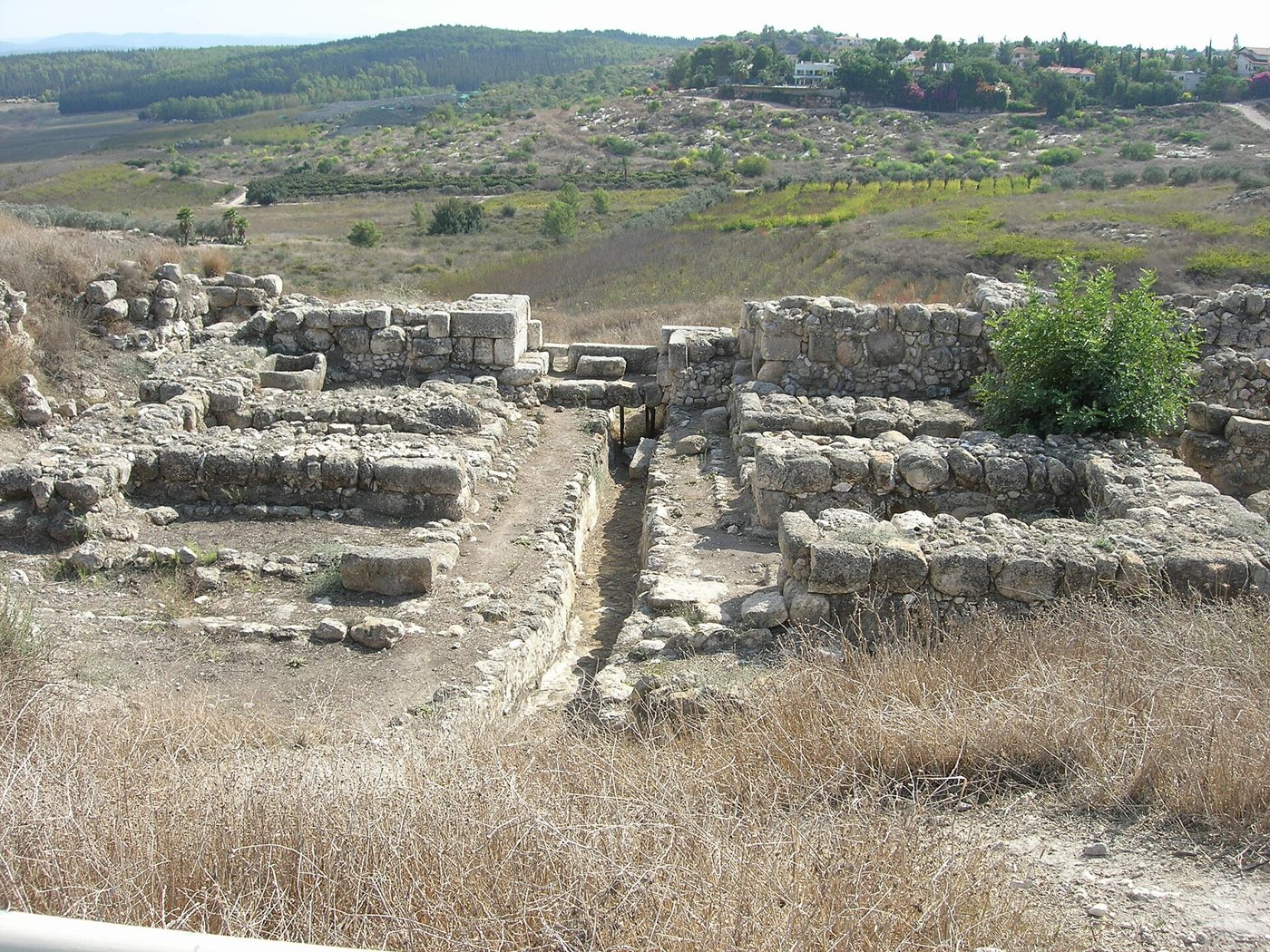
DisputedThe six-chamber Iron Age gate at Tel Gezer. Mickael101 at Hebrew Wikipedia, via Wikimedia Commons, Public domain.
And this is the reason of the levy which king Solomon raised; for to build the house of the LORD, and his own house, and Millo, and the wall of Jerusalem, and Hazor, and Megiddo, and Gezer.
1 Kings 9:15, KJV
1 Kings 9:15 says Solomon raised forced labour to build the temple, his palace, the wall of Jerusalem, and the cities of Hazor, Megiddo and Gezer. In 1958 Yigael Yadin uncovered a large city gate at Hazor with six rooms, three on each side of the passage. He linked it with gates of the same plan at Megiddo and Gezer and argued that all three were built by Solomon, as this verse says. William Dever, who dug at Gezer from the 1960s, agreed and called the Gezer gate "Solomonic".
Where it is today
Tel Gezer, Tel Hazor and Tel Megiddo national parks, Israel. The gates can be seen at all three sites. A "tel" is a mound built up from the ruins of many towns, one on top of another.
Date
Iron Age. Conventional dating: the 900s BC, in Solomon's time (about 970 to 930 BC). Low dating: the 800s BC for the layers at Megiddo and Hazor, and the 700s BC for the Megiddo gate in one excavator's view.
Why this label: The gates are real, but experts disagree on whether they were built in Solomon's time or up to a century or more later. Recent radiocarbon dates at Gezer support the earlier date there, according to its excavators, while the dating at Megiddo and Hazor is still argued.
Good to know
Conventional view: Scholars such as Amihai Mazar, William Dever and Amnon Ben-Tor date these gates and the layers around them to the 900s BC. Mazar's adjusted version of this dating lets the pottery style of that time run from the early 900s to the mid-800s BC, which still allows for building under Solomon.
Low chronology view: In the mid-1990s Israel Finkelstein proposed that the layers usually given to Solomon belong up to a century later, to the 800s BC, the time of the northern kings Omri and Ahab. His main reason is that the pottery and building styles in these layers at Megiddo match those found at Samaria and Jezreel, in layers linked to Omri's family. On this view the gates are not Solomon's, and the kingdom of David and Solomon was much smaller and poorer than 1 Kings describes. Finkelstein wrote that accepting his dating means "stripping the United Monarchy of monumental buildings". By "United Monarchy" he means the single kingdom ruled by David and Solomon.
The Megiddo gate: Yadin held that the Megiddo gate was first built in Solomon's time with an earlier wall and was used again later, and many scholars still follow him. David Ussishkin, who dug at Megiddo, argues from the layers there that the gate had only one floor and was built together with a later city wall, so it belongs to a later city, probably of the 700s BC. He says the date of the gate tells us little either way about the nature of Solomon's kingdom, which has to be judged on other grounds.
The Gezer digs: In renewed digs beside the Gezer gate, Steven Ortiz and Samuel Wolff studied the layer that holds the gate, a casemate wall (a double wall divided into rooms) and a large public building. This layer lies below another layer that radiocarbon dating places in the late 900s or early 800s BC. Radiocarbon dating measures the slow decay of carbon in once-living things such as seeds. In 2021 they concluded that the Gezer gate dates to about Solomon's reign, against Finkelstein's proposal. This conclusion depends on their view that the gate and the casemate wall were built at the same time. They also doubted the popular name "Solomon's Palace" for the building.
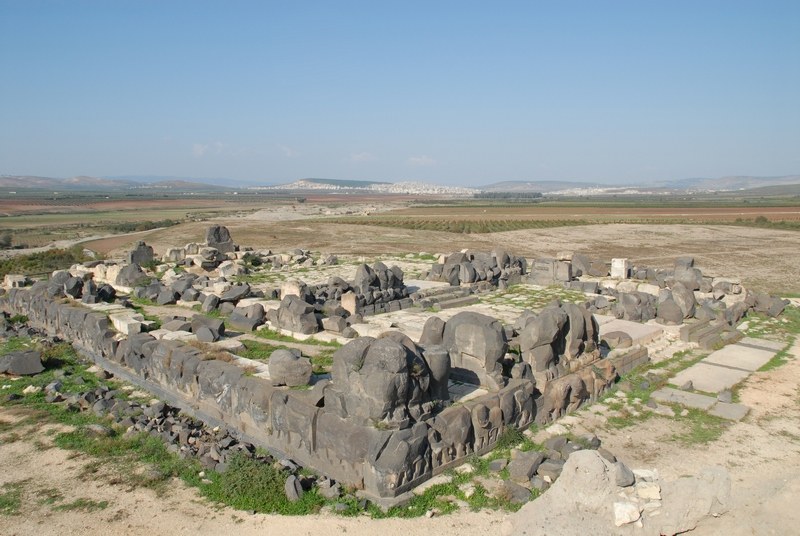
BackgroundThe Ain Dara temple in Syria, seen from the south, before the damage of 2018. Ab Langereis / Livius.org, CC0 1.0.
And the house which king Solomon built for the LORD, the length thereof was threescore cubits, and the breadth thereof twenty cubits, and the height thereof thirty cubits.
1 Kings 6:2, KJV
1 Kings 6 to 7 and 2 Chronicles 3 to 4 describe Solomon's temple: a porch, a main hall and an inner room (the most holy place), with side rooms around it, two bronze pillars at the entrance, and carvings of cherubim (winged heavenly beings), palm trees and flowers. No trace of Solomon's temple itself has been found. The Temple Mount in Jerusalem is a holy place in use today and cannot be excavated. What archaeology can offer instead is temples elsewhere in the region built on a similar plan.
Where it is today
Ain Dara temple: northwestern Syria, about 67 kilometres northwest of Aleppo. Access is limited, so check before planning a visit. Tel Motza temple: just outside Jerusalem, Israel. Ivory pomegranate: Israel Museum, Jerusalem.
Date
Solomon's temple: built in the 900s BC by the Bible's dating, destroyed in 586 BC. Ain Dara temple: about 1300 to 740 BC, in three building stages. Tel Motza temple: from about 900 BC to the early 500s BC. Ivory pomegranate: about 1300s or 1200s BC, with an inscription judged to be modern.
Why this label: These temples show that a three-room temple like the one the Bible describes fits the region and the period. They do not name Solomon or prove his temple existed, and nothing of the Jerusalem temple itself has been found.
Good to know
Ain Dara: This temple in Syria, about 30 by 20 metres, had a porch with two pillars, a main hall and an inner shrine, with side rooms added later along three sides, much like the plan in 1 Kings 6. It was decorated with carved lions and sphinxes (winged creatures with a lion's body), which many compare with the cherubim of Solomon's temple. Giant footprints carved into the entrance floor are usually taken to show the belief that a god lived inside. In January 2018 the temple was badly damaged by airstrikes, and reports said more than half of it was reduced to rubble.
Tel Motza: In 2012 archaeologists found a temple just outside Jerusalem that was in use from about 900 BC to the early 500s BC. It had a wide entrance facing east, and animals were sacrificed on a stone altar in the courtyard in front. It shows that at least one other temple stood in the kingdom of Judah, close to Jerusalem, during the same centuries as the Jerusalem temple.
The pomegranate: A thumb-sized carved pomegranate, 44 millimetres high, made of hippopotamus bone rather than ivory, carries the words "(Belonging) to the temple of Yahweh, holy to the priests". Part of the name Yahweh falls in a broken area and is filled in by scholars. The Israel Museum bought it in 1988 for 550,000 US dollars. For years it was often described as the only known object from Solomon's temple (1 Kings 7:18 describes pomegranates on the temple pillars). In 2004 a committee of experts found that the pomegranate itself is genuine but much older, from the Bronze Age, and that the inscription was added in modern times. The museum accepted this finding. André Lemaire, who first published the inscription, still holds that it is genuine. In 2007 three members of the committee studied it again with him and kept their view that it is a forgery.
And they came to Ophir, and fetched from thence gold, four hundred and twenty talents, and brought it to king Solomon.
1 Kings 9:28, KJV
1 Kings says Solomon's ships, sailing with King Hiram's sailors, brought gold from Ophir, and that King Jehoshaphat later built ships to go to Ophir for gold, but they were wrecked. In 1945 and 1946, before any digging began there, two ostraca were picked up separately on the surface at Tell Qasile, an ancient site in today's Tel Aviv. An ostracon is a broken piece of pottery used as cheap writing material. One of them, written in Hebrew, reads "Gold of Ophir to (or belonging to) Beth-horon, 30 shekels."
Where it is today
Israel Museum, Jerusalem.
Date
About the late 700s or early 600s BC.
Why this label: This sherd shows, from outside the Bible, that "gold of Ophir" was a real name for gold in ancient Israel, as the Bible uses it. It does not show where Ophir was, and the phrase may mean a grade of fine gold named after Ophir rather than gold shipped from there.
Good to know
Where was Ophir: No one knows. The list of peoples in Genesis 10:29 seems to place Ophir in Arabia. Proposals include parts of Arabia, East Africa (near the land the Egyptians called Punt), and India, which the Jewish historian Josephus favoured.
Reading the text: The small Hebrew word before Beth-horon can mean "to" or "belonging to". Beth-horon may be the town of that name (Joshua 21:22) or a temple of the Canaanite god Horon.
Its date: The sherd is more than 200 years later than Solomon, and it does not mention him. It shows the name was in use, not that Solomon's voyages took place.
The copper mines of Timna and Faynan ("King Solomon's Mines")
1 Kings 7:45-47 · 2 Samuel 8:14 · Deuteronomy 8:9
Disputed
And Solomon left all the vessels unweighed, because they were exceeding many: neither was the weight of the brass found out.
1 Kings 7:47, KJV
The Bible says Solomon used so much bronze (the KJV says "brass") for the temple that it was never weighed (1 Kings 7:45-47), and that David put soldiers in Edom (2 Samuel 8:14). The Bible never mentions Solomon owning mines. In the 1930s Nelson Glueck surveyed ancient copper sites in the Arabah, the desert valley between the Dead Sea and the Red Sea, and called them King Solomon's Mines. The two main areas are Timna in southern Israel and Faynan in Jordan, where Khirbat en-Nahas ("ruins of copper") is one of the largest ancient copper smelting sites known. Smelting means heating rock ore to draw out the metal, and slag is the waste left behind.
Where it is today
Timna Park, north of Eilat, southern Israel; Khirbat en-Nahas, Wadi Faynan, southern Jordan.
Date
Copper has been mined in the Arabah for more than 6,000 years. Egyptian-run mining at Timna: about 1300s to 1100s BC. Large-scale Iron Age production: mainly the 900s and 800s BC, by radiocarbon dating, which measures the slow decay of carbon in once-living things such as charcoal.
Why this label: The mines are real, and radiocarbon dates now place a peak of mining in the 900s and 800s BC, a period that includes the time the Bible gives for Solomon. But nothing found at the mines names Solomon or Israel, and experts disagree about who ran them; most link them to Edom.
Good to know
Glueck and after: In 1969 Beno Rothenberg's team found an Egyptian shrine at Timna (see the Exodus page) and dated most of the mining there to the 1300s to 1100s BC, under Egypt. Glueck withdrew his claim that a building at Tell el-Kheleifeh, near the head of the Gulf of Aqaba, was a copper refinery, but he never accepted the earlier dates for the Timna pottery.
New dates: Thomas Levy and Mohammad Najjar dug at Khirbat en-Nahas from 2002. Radiocarbon dates they published in 2008 put large-scale production there in the 900s and 800s BC, about 300 years earlier than many scholars had thought. Erez Ben-Yosef's team later dated the miners' camp called Slaves' Hill at Timna to the 900s BC.
Nomadic Edom: Ben-Yosef argues that the people who ran these mines were Edomites who lived mainly in tents, yet formed a complex, well-organized society while leaving few buildings. He says archaeologists have relied too much on stone buildings when judging how strong a kingdom was, and that a kingdom like that of David and Solomon could also have left little trace.
Link to Solomon: Ben-Yosef has suggested Jerusalem may have profited by taxing the mines, if David did control Edom. This is a possibility, not something the finds show.
Doubting views: Israel Finkelstein disputes that the miners were Edomites. He proposes instead that the copper trade was run by desert tribes whose leaders were based in the Beersheba Valley, at sites such as Tel Masos. He has written that this work in the Arabah has no bearing on the study of ancient Israel. In 2008 Piotr Bienkowski accepted that nomads probably made copper at Khirbat en-Nahas around this time, but saw no evidence of settled buildings there before the very end of the 900s or the start of the 800s BC. Aren Maeir agrees that nomads can form complex societies, but says there is still no evidence of a large kingdom under David and Solomon "on any level."
1 Kings 10:1-13 · 2 Chronicles 9:1-12 · Matthew 12:42
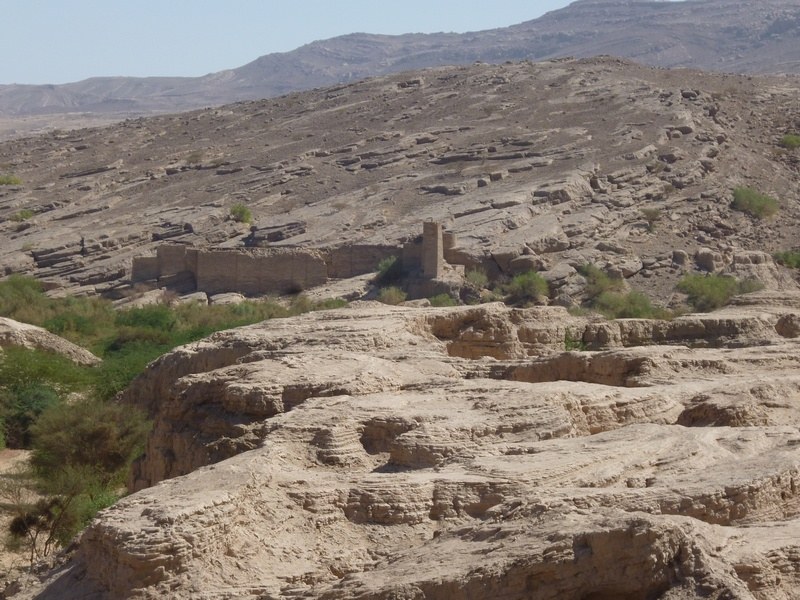
DisputedThe southern sluice (water outlet) of the ancient Marib dam, Yemen, seen from a distance. Sarah Rijziger / Livius.org, CC0 1.0.
And when the queen of Sheba heard of the fame of Solomon concerning the name of the LORD, she came to prove him with hard questions.
1 Kings 10:1, KJV
1 Kings 10 tells how the queen of Sheba came to Jerusalem to test Solomon with hard questions, bringing camels loaded with spices, gold and precious stones. Jesus later called her "the queen of the south" (Matthew 12:42). Most historians link Sheba with Saba, a kingdom in what is now Yemen, in southern Arabia. Its capital, Marib, had a great dam and the large Awam temple of the god Almaqah, known locally as Mahram Bilqis, the "sanctuary of Bilqis". Bilqis is the queen's name in Islamic tradition.
Where it is today
Marib, Yemen: the ancient city, the Awam and Barran temples and the remains of the Marib dam were added together to the UNESCO World Heritage List in 2023. Access is very limited, so check before planning any visit.
Date
Kingdom of Saba: began about 1000 to 800 BC (scholars differ) and lasted until about AD 275. Great dam of Marib: about the 700s BC, finally failing about AD 570. Solomon's reign: about 970 to 930 BC.
Why this label: Saba was a real kingdom, and most scholars agree it is the Bible's Sheba. But no trace of the queen herself has been found, and Saba's own written records mostly begin after Solomon's time, so whether a queen came from there in the 900s BC is debated.
Good to know
Dating problem: Sabaean writing on stone becomes common only in the 700s BC. Rulers known by name, such as Yatha Amar Watar and Karib-il Watar, lived in the late 700s and early 600s BC. One view holds that the first traces of a Sabaean kingdom appear about 150 years after Solomon, so some scholars see the story as written later.
Earlier view: Other scholars, such as Peter Stein, argue that the Sabaean kingdom had already formed by the 900s BC. Digs show that a wall stood around the Sabaean town of Sirwah by then, and that the Barran temple at Marib had older forms going back to the 900s BC. Some scholars also hold that southern Arabia was trading abroad by about 890 BC. Assyrian records mention queens of Arab peoples further north.
The temple: Wendell Phillips dug at the Awam temple in 1951 and 1952. An inscription shows that its great oval wall was built in the 600s BC. Nothing found there links it to the Queen of Sheba.
Ethiopian tradition: The Kebra Nagast, an Ethiopian book from the 1300s AD, names the queen Makeda. It says her son by Solomon, Menelik the First, founded Ethiopia's royal line and that the Ark of the Covenant was taken to Ethiopia. Sabaean influence did reach across the Red Sea, where the temple at Yeha in Ethiopia was built for the Sabaean god Almaqah, but this was well after Solomon's time. The Jewish historian Josephus placed her kingdom in Africa, around Meroe in today's Sudan.
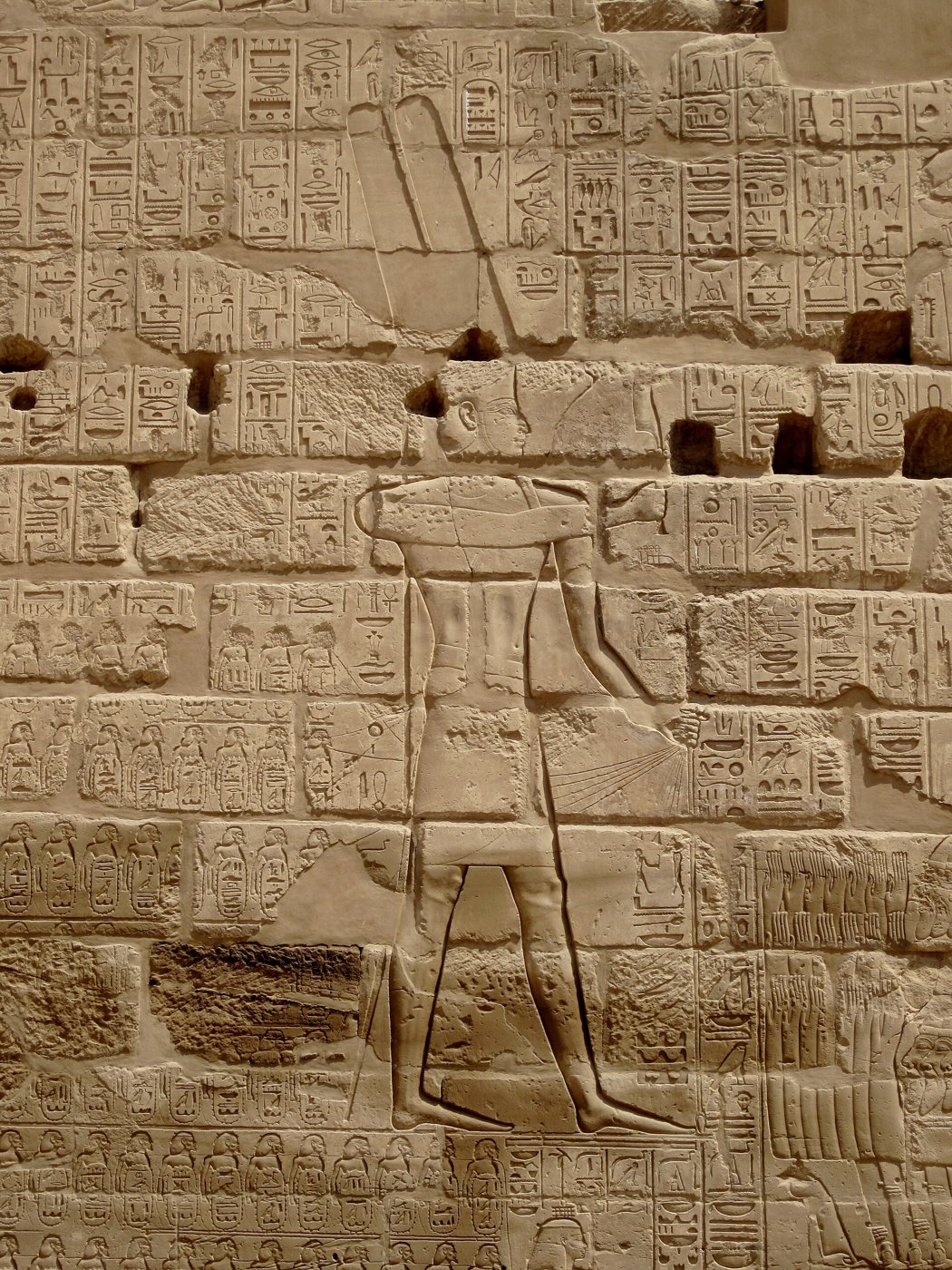
ConfirmedPart of Shoshenq the First's campaign relief at the temple of Amun at Karnak: a large carved figure, with rows of bound captives, each set above an oval holding a town name. Olaf Tausch, via Wikimedia Commons, CC BY 3.0.
And it came to pass in the fifth year of king Rehoboam, that Shishak king of Egypt came up against Jerusalem:
1 Kings 14:25, KJV
The Bible says that in the fifth year of King Rehoboam, Shishak king of Egypt came up against Jerusalem and took the treasures of the temple and the palace. Most scholars identify Shishak with Pharaoh Shoshenq the First, who founded Egypt's 22nd Dynasty. The Bible says Shishak had earlier sheltered Jeroboam (1 Kings 11:40). At the temple of Amun at Karnak in Egypt, beside a gateway called the Bubastite Portal, a large wall scene shows the god Amun presenting the king with rows of captured towns. Each town's name is written in an oval below the head and shoulders of a bound prisoner. A broken limestone block carrying his names was also found at Megiddo in northern Israel.
Where it is today
The relief is on the south outer wall of the great temple of Amun-Re at Karnak, Luxor, Egypt, next to the Bubastite Portal. The Megiddo fragment was found in 1925 by the University of Chicago team and is now kept in Jerusalem. Sources differ on whether it is in the Rockefeller Archaeological Museum or on show at the Israel Museum, so check before planning to see it.
Date
Shoshenq the First reigned about 943 to 922 BC. His campaign is usually dated to about 925 BC, give or take 10 to 15 years. The campaign scenes at Karnak were carved late in his reign.
Why this label: Egyptian monuments clearly record this pharaoh and his campaign into the land of Israel, and the Hebrew name Shishak fits Shoshenq well. What is debated is how his list relates to the Bible's account of Jerusalem, because the readable list does not name Jerusalem.
Good to know
What the list says: About 150 or more names were carved, but many are now broken or lost. The readable names are mostly towns in the northern kingdom of Israel, such as Megiddo, Taanach, Beth-shean, Gibeon and Mahanaim, plus a long group of small places in the Negev, such as Arad.
Jerusalem question: Jerusalem does not appear among the names that can still be read, and neither do Rehoboam or Jeroboam. Some scholars think it stood in a damaged part, some think Rehoboam's payment kept the city off the list (2 Chronicles 12:7-9), and some, such as Israel Finkelstein, doubt that the raid on Jerusalem happened as told. In the 1820s the French scholar Champollion read one name as "kingdom of Judah". That reading is now rejected, and the name is read as "Hand of the King".
Doubting view: Some scholars say such lists show the pharaoh's claim to rule the world and were partly copied from older lists, so they are not a simple travel record. Others reply that the fragment of his inscription found at Megiddo, a town on the list, points to a real campaign.
The Megiddo piece: It was found out of place, in loose earth used to level the ground, and holds only the king's names and titles. A 2023 study by Shirly Ben Dor Evian and Israel Finkelstein argues it came from an inscribed building block, not a free-standing victory stone (a stele). It shows Egyptian presence at Megiddo, but not by itself a battle there.
Dan, where Jeroboam set up a golden calf: the high place at Tel Dan
1 Kings 12:28-30 · 2 Kings 10:29 · Amos 8:14
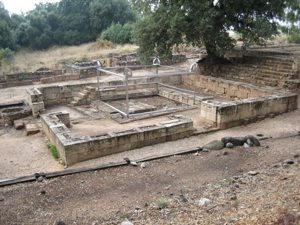
ConfirmedThe Israelite sacred area at Tel Dan, with the metal frame marking the altar (a small photo; no larger free photo was found). Donatus at Croatian Wikipedia, via Wikimedia Commons, CC BY-SA 2.5.
And this thing became a sin: for the people went to worship before the one, even unto Dan.
1 Kings 12:30, KJV
The Bible says Jeroboam the First set up a golden calf at Dan so that his people would not go to Jerusalem to worship. On the north side of Tel Dan, close to a spring that feeds the Jordan River, archaeologist Avraham Biran uncovered a sacred area with a large platform of cut stone, which he identified as a bamah, the Hebrew word for a high place. Beside it was an altar area where a small four-horned altar and one large stone horn from a much bigger altar were found. Side rooms held shovels for carrying coals, incense altars, a jar of ashes and other worship items. No calf was found.
Where it is today
Tel Dan Nature Reserve, northern Israel, at the foot of Mount Hermon. Visitors can see the restored platform, its staircase, the altar area and the side rooms. A modern metal frame marks the outline and estimated size of the large altar.
Date
Biran dated the first platform to the late 10th century BC (Jeroboam the First). He dated a larger platform, about 18 by 19 metres, to the 9th century BC (he linked it to Ahab) and new steps and side rooms to the 8th century BC (Jeroboam the Second). Worship at the spot went on into Greek and Roman times.
Why this label: The site is certainly Dan: a vow inscription in Greek and Aramaic from about 200 BC, found in the sacred area, is made to "the god who is in Dan". A large official shrine clearly stood there in the time of Israel's kings, but whether its first phase goes back to Jeroboam the First himself is debated.
Good to know
The digs: Biran dug at Tel Dan every year from 1966 for more than 30 years, one of the longest digs in Israel.
Dating debate: The dates for building and destruction were drawn partly from the Bible and from Assyrian records, and many finds were published only in early reports. In 2008 Eran Arie re-examined the finds and argued that Dan was empty or only a small village in the 10th century BC, and that the level Biran gave to Jeroboam belongs to the late 9th or early 8th century BC. If Arie is right, the platform we see was built by later kings, and Jeroboam's first shrine has not been clearly found.
Other shrines: Biran also found several groups of standing stones near the city gates, which he linked to the high places of the gates in 2 Kings 23:8.
See also: Dan's older mud-brick gate is on the Judges page, and the Tel Dan Stele is on the Samuel page.
Beth-el, Jeroboam's other shrine, and the search for it
1 Kings 12:29-33 · 1 Kings 13:1-5 · 2 Kings 23:15
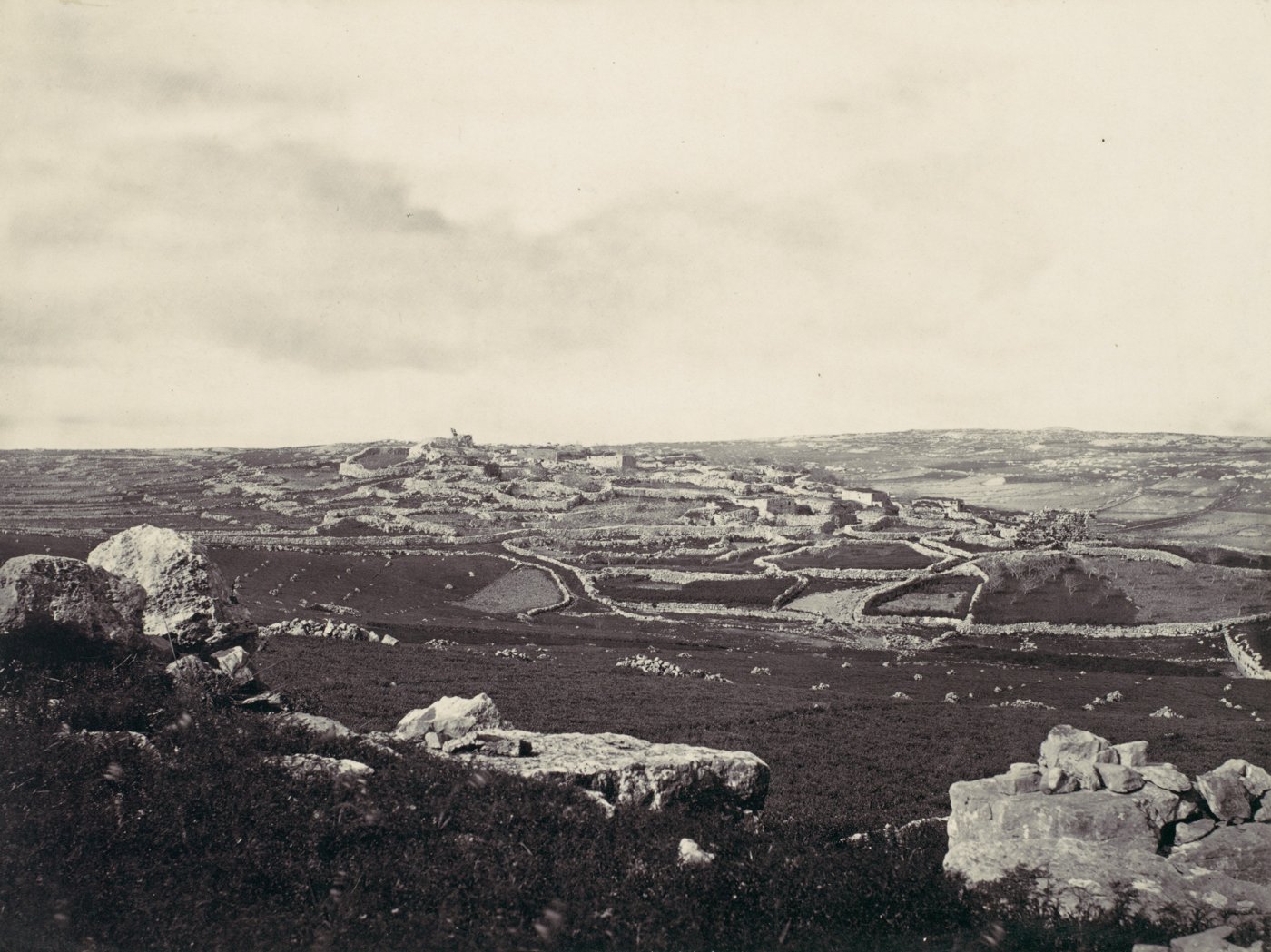
DisputedThe village of Beitin (Beth-el) and its walled fields, photographed by Francis Frith about 1857. Francis Frith, Bethel, about 1857. The Metropolitan Museum of Art, The Elisha Whittelsey Collection, The Elisha Whittelsey Fund, 1973, Public Domain (The Met Open Access, CC0).
And, behold, there came a man of God out of Judah by the word of the LORD unto Beth-el: and Jeroboam stood by the altar to burn incense.
1 Kings 13:1, KJV
The Bible says Jeroboam the First set up his second golden calf at Beth-el, near the southern edge of his kingdom, with an altar, priests and a feast he made up himself (1 Kings 12:29-33). A prophet from Judah spoke against this altar (1 Kings 13), Amos later called Beth-el the king's chapel (Amos 7:13), and King Josiah broke down its altar and high place (2 Kings 23:15). Most scholars place Beth-el at the village of Beitin, north of Jerusalem. But the shrine itself has never been found.
Where it is today
Beitin, a village about 5 kilometres northeast of Ramallah. Much of the ancient site lies under the modern village. Access is limited, so check before planning a visit.
Date
By the Bible's account the shrine was used from Jeroboam the First (late 10th century BC) until Josiah (late 7th century BC). Excavations at Beitin took place in 1927 (a test pit), 1934, 1937, 1954, 1957 and 1960.
Why this label: The town of Beth-el is broadly accepted as Beitin (see the Genesis page), though no inscription naming it has been found. No trace of Jeroboam's shrine has been found, and where it stood is unknown.
Good to know
The digs: William F. Albright and James L. Kelso dug at Beitin in 1934, and Kelso continued in 1937, 1954, 1957 and 1960, publishing a final report in 1968. They found Bronze Age and Iron Age remains, but no temple from the time of the kings. Only limited areas could be dug, and the centre of the mound was not excavated.
Where was the shrine: Oded Lipschits and Aharon Tavger have suggested the temple may have stood outside the town, perhaps on a hilltop about 900 metres east of Beitin called Elevation Point 914. Tavger's survey and dig there found remains from the Middle Bronze Age and the Iron Age. These results are early and do not yet prove a shrine.
Pottery debate: In 2009 Israel Finkelstein and Lily Singer-Avitz argued from the pottery that Beth-el was small in the 10th and 9th centuries BC and thrived in the 8th century BC. Lipschits replied that the old pottery sample is too small and uneven to settle this.
Other views: David Livingston argued that Beitin is not Beth-el at all, and that Beth-el lay at el-Bireh beside Ramallah. He noted that Albright himself admitted the dig alone would not prove Beitin is Beth-el without the Bible and the early church writers. Most scholars still keep Beitin, mainly because of the name and the distance from Jerusalem given by Eusebius and Jerome in the 4th century AD.
Tirzah, the early capital of the northern kingdom (Tell el-Far'ah North)
1 Kings 14:17 · 1 Kings 15:33 · 1 Kings 16:15-23
Confirmed
In the thirty and first year of Asa king of Judah began Omri to reign over Israel, twelve years: six years reigned he in Tirzah.
1 Kings 16:23, KJV
Tirzah was a royal city of the northern kingdom of Israel. Jeroboam's son died there, and the kings Baasha, Elah, Zimri and Omri ruled from it. Zimri burned the palace over himself there, and Omri reigned 6 years in Tirzah before he moved the capital to Samaria. Most scholars place Tirzah at Tell el-Far'ah (North), a large mound beside strong springs where the Wadi Far'ah valley starts to run down toward the Jordan.
Where it is today
Tell el-Far'ah (North), about 11 kilometres northeast of Nablus, near the village of Wadi al-Far'a. Do not confuse it with Tell el-Far'ah (South) in the Negev. Access is limited, so check before planning a visit.
Date
Tirzah was the capital for about 50 years, from Jeroboam the First or Baasha until Omri moved to Samaria in the early 9th century BC (about 880 BC). The mound itself was lived on, with long gaps, from the Stone Age until about 600 BC.
Why this label: No inscription naming Tirzah has been found at the site. Most scholars accept the match because of its location, springs and road, and an Iron Age town whose history fits the Bible, though the identification was debated in the past.
Good to know
The digs: Roland de Vaux of the École Biblique in Jerusalem dug here in 9 seasons from 1946 to 1960. He found an Israelite town and, in a later phase, a large building that was apparently never finished. Many link this to Omri moving the capital to Samaria (1 Kings 16:23-24), but that link is an interpretation, not a written record. A team led by a Spanish university dug there again from 2017 to 2019.
Other proposals: In the 1800s Edward Robinson and Victor Guérin suggested the village of Talluza, and Conder and Kitchener suggested Tayasir. William F. Albright proposed Tell el-Far'ah in the 1930s, and most scholars now accept it.
Shishak list: A partly broken name in Shoshenq the First's list at Karnak may be Tirzah, but because part of it is missing the reading is uncertain.
Samaria, the capital built by Omri, and the Samaria ostraca
1 Kings 16:24 · 1 Kings 16:28-29 · 2 Kings 17:5-6
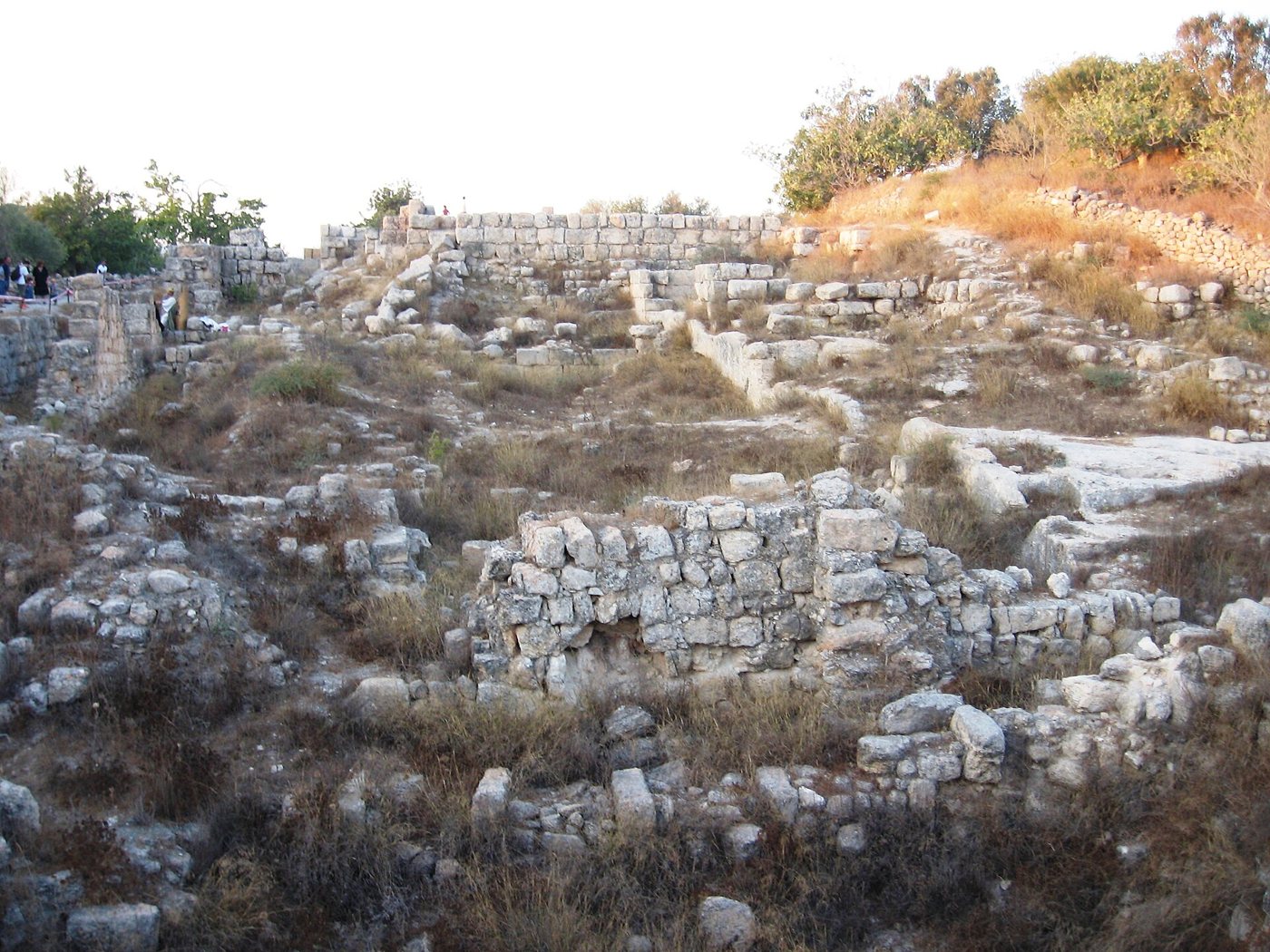
ConfirmedRemains of the Israelite royal palace on the hilltop royal area of Samaria (captioned as Ahab's palace). Daniel Ventura, via Wikimedia Commons, CC BY-SA 3.0.
And he bought the hill Samaria of Shemer for two talents of silver, and built on the hill, and called the name of the city which he built, after the name of Shemer, owner of the hill, Samaria.
1 Kings 16:24, KJV
The Bible says King Omri bought the hill of Samaria from Shemer for two talents of silver and built a new capital on it. Excavations on the summit uncovered a walled royal area: a large palace on a raised rock platform, later enlarged and surrounded by a massive wall of finely cut stone. Assyrian records call the kingdom ruled from Samaria "the house of Omri", naming it after him, which fits the Bible's statement that Omri founded the city. In 1910 the excavators also found the Samaria ostraca, pieces of broken pottery with notes in ink that record deliveries of wine and oil to the capital.
Where it is today
The ruins of Samaria-Sebaste stand on the hill above the village of Sebastia, northwest of Nablus. The Israelite palace remains, the later Roman temple of Augustus and other ruins can be seen. Access is limited, so check before planning a visit. The ostraca are held by the Istanbul Archaeology Museums, Turkey.
Date
Samaria was Israel's capital from about 880 BC until the Assyrians captured it in about 722 to 720 BC. The ostraca date to the first half of the 8th century BC. Their year numbers (years 9, 10, 15 and 17) may count the reign of Jeroboam the Second.
Why this label: Assyrian texts name the city. Herod the Great later rebuilt it and renamed it Sebaste, in honour of the Roman emperor Augustus, and that name survives in the village of Sebastia on the same hill. Scholars broadly agree that the royal remains on the summit are Omri's capital.
Good to know
The digs: A Harvard University expedition dug here from 1908 to 1910, first under Gottlieb Schumacher and then George Andrew Reisner, with C. S. Fisher and D. G. Lyon. A second Joint Expedition of 5 institutions, led by John Winter Crowfoot with Kathleen Kenyon and E. L. Sukenik, dug from 1931 to 1935.
The ostraca: There are 102 pieces, and about 63 can be read. They were found in loose earth used to level the ground under the floor of a building now called the Ostraca House. Each note starts with a year, then names a place, a person and a jar of aged wine or fine oil. Many of the places match clans of Manasseh named in Joshua 17:2, such as Abiezer, Shemida and Helek. Scholars still debate whether they are tax receipts or records of goods sent to the court by local leading families.
Dating debate: Newer studies question whether the enlargement of the royal area, long credited to Ahab, can be firmly dated, and Norma Franklin has proposed that two rock-cut tombs below the palace belonged to Omri and Ahab. These are proposals, not settled facts.
Ivories: Many pieces of carved ivory were also found near the palace; see the Samaria ivories entry on this page.
The Kurkh Monolith: "Ahab the Israelite" at the Battle of Qarqar
1 Kings 16:29 · 1 Kings 20:34 · 1 Kings 22:1
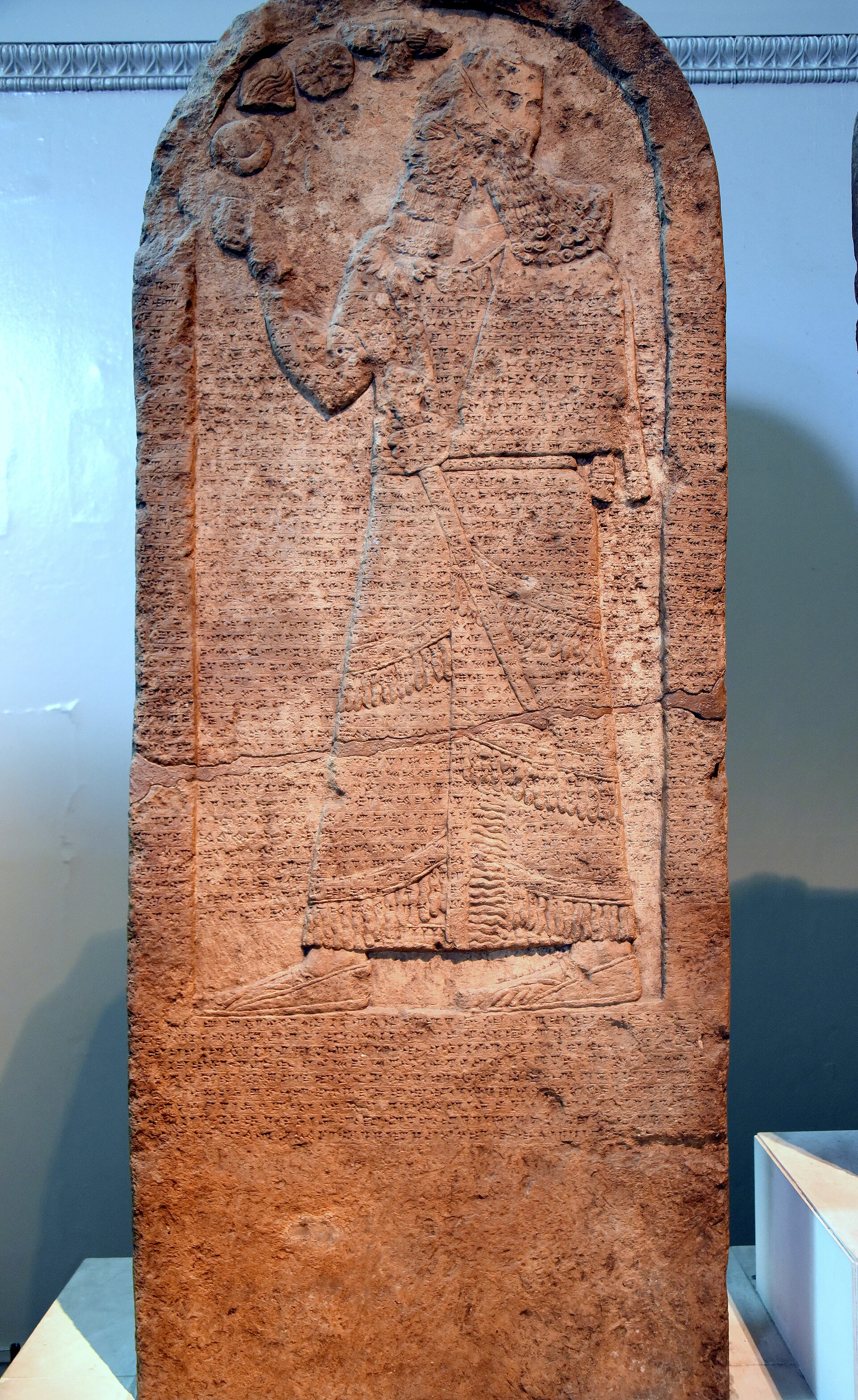
ConfirmedThe Kurkh stele of Shalmaneser the Third in the British Museum. Osama Shukir Muhammed Amin, via Wikimedia Commons, CC BY-SA 4.0.
And in the thirty and eighth year of Asa king of Judah began Ahab the son of Omri to reign over Israel: and Ahab the son of Omri reigned over Israel in Samaria twenty and two years.
1 Kings 16:29, KJV
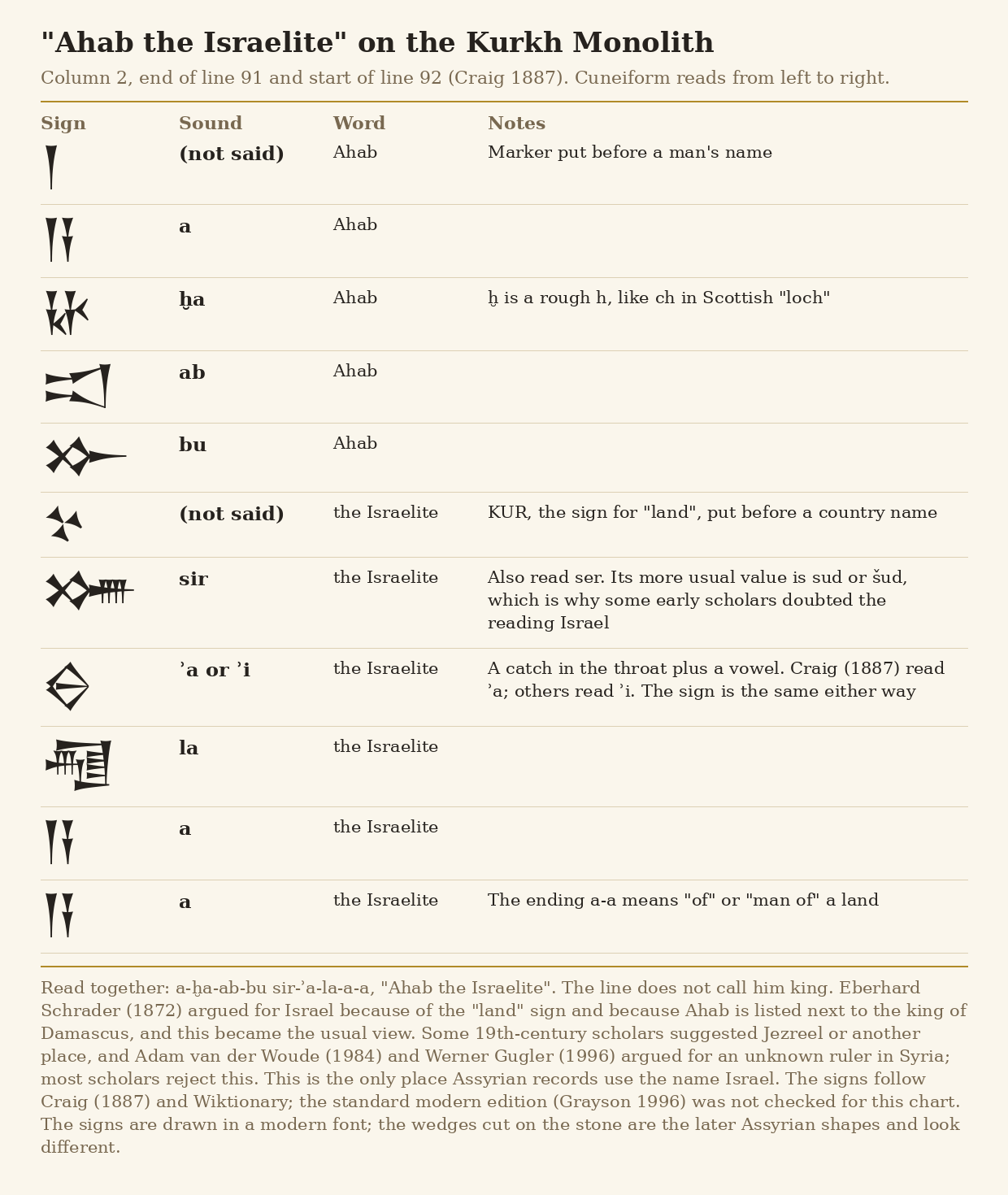
This is a tall stone slab (a stele) set up by the Assyrian king Shalmaneser the Third. It is covered in cuneiform, the wedge-shaped writing of ancient Iraq. It ends with his account of a battle at Qarqar in Syria in 853 BC, where he fought an alliance of local kings. In Daniel Luckenbill's English translation (1926) the list of enemies includes "2,000 chariots, 10,000 soldiers of Ahab, the Israelite". Most scholars take this to be the Ahab of 1 Kings 16 to 22. The chart below shows the cuneiform signs for "Ahab the Israelite" one by one.
Chart of the cuneiform signs for "Ahab the Israelite" (a-ḫa-ab-bu sir-ʾa-la-a-a), with each sign's sound and a note. The note explains the doubt over the second syllable (ʾa or ʾi) and the old debate over whether the land is Israel. Chart made for this page, free to reuse.
Where it is today
British Museum, London (museum number 118884). It was found in 1861 by John George Taylor at Kurkh (now Üçtepe), near Diyarbakır in southeastern Turkey.
Date
Set up about 852 BC. The battle it describes was fought in 853 BC.
Why this label: The stone is genuine and names "Ahab" from a land read as "Israel", next to the king of Damascus, at the time the Bible places King Ahab. A few scholars have doubted that this is the Bible's Ahab, but most accept it.
Good to know
The exact words: The line itself says only "Ahab, the Israelite" and does not call him king. The list ends by calling them all "these twelve kings", although only eleven are named. The cuneiform writes his name as A-ha-ab-bu and his land as Sir-'i-la-a-a, "the Israelite". This is the only known place where Assyrian records use the name Israel; they usually call the kingdom the "House of Omri".
The spelling: The first sign of the land name is usually read "sir", so some early scholars read "Jezreel" or another place. Adam van der Woude (in 1984) and Werner Gugler (in 1996) argued that this Ahab was an unknown ruler in northwestern Syria. Most scholars reject this, because he is listed next to the king of Damascus, and the same Assyrian king later names "Jehu son of Omri".
Chariot numbers: 2,000 chariots would be more than any other king on the list. Nadav Na'aman suggested a scribe's error for 200. Others note that "Israel" here may have included smaller states under its control, such as Moab, Edom or Judah, which could help explain a large force.
Not in the Bible: The Bible never mentions Qarqar or this battle. It does say Ahab made a covenant with the king of Damascus (1 Kings 20:34) and that there were three years without war with Syria (1 Kings 22:1), which fits an alliance. The stone names the Damascus king Hadadezer, while 1 Kings 20 names Ahab's Syrian rival as Ben-hadad.
Who won: Shalmaneser claims a great victory, but he had to fight the same alliance again in later years, so his claim is likely exaggerated.
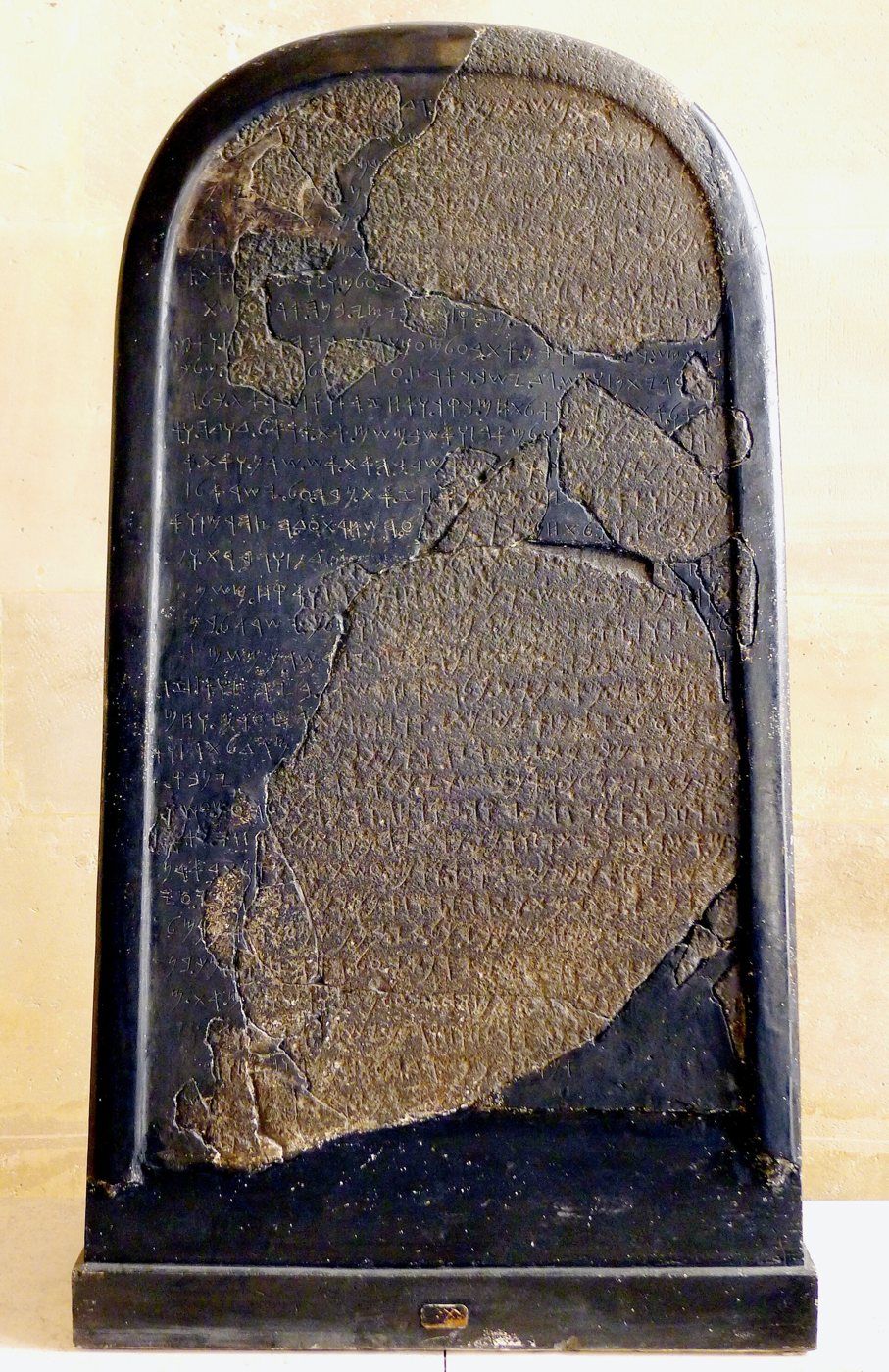
ConfirmedThe rebuilt Mesha Stele on display in the Louvre: the rough brown pieces are the original stone, and the smooth black parts were filled in when it was rebuilt in the 1870s. Mbzt, via Wikimedia Commons, CC BY 3.0.
But it came to pass, when Ahab was dead, that the king of Moab rebelled against the king of Israel.
2 Kings 3:5, KJV
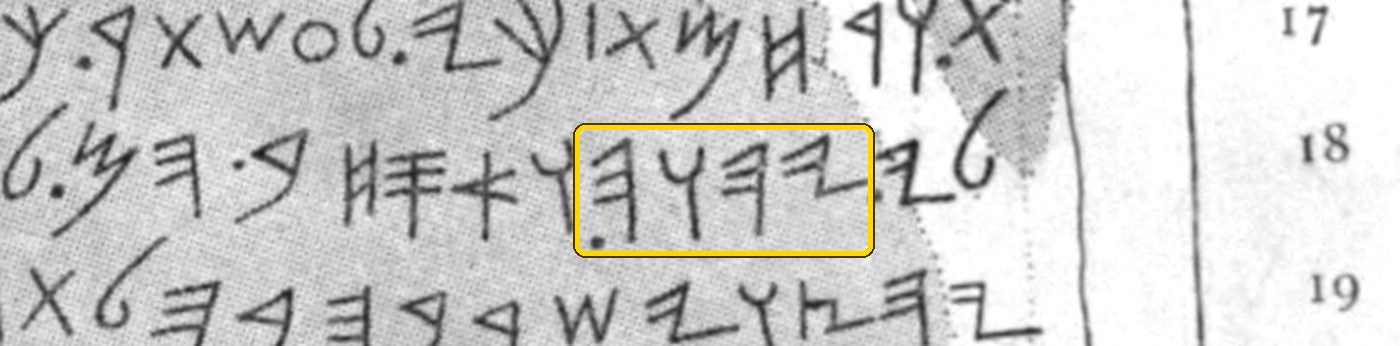
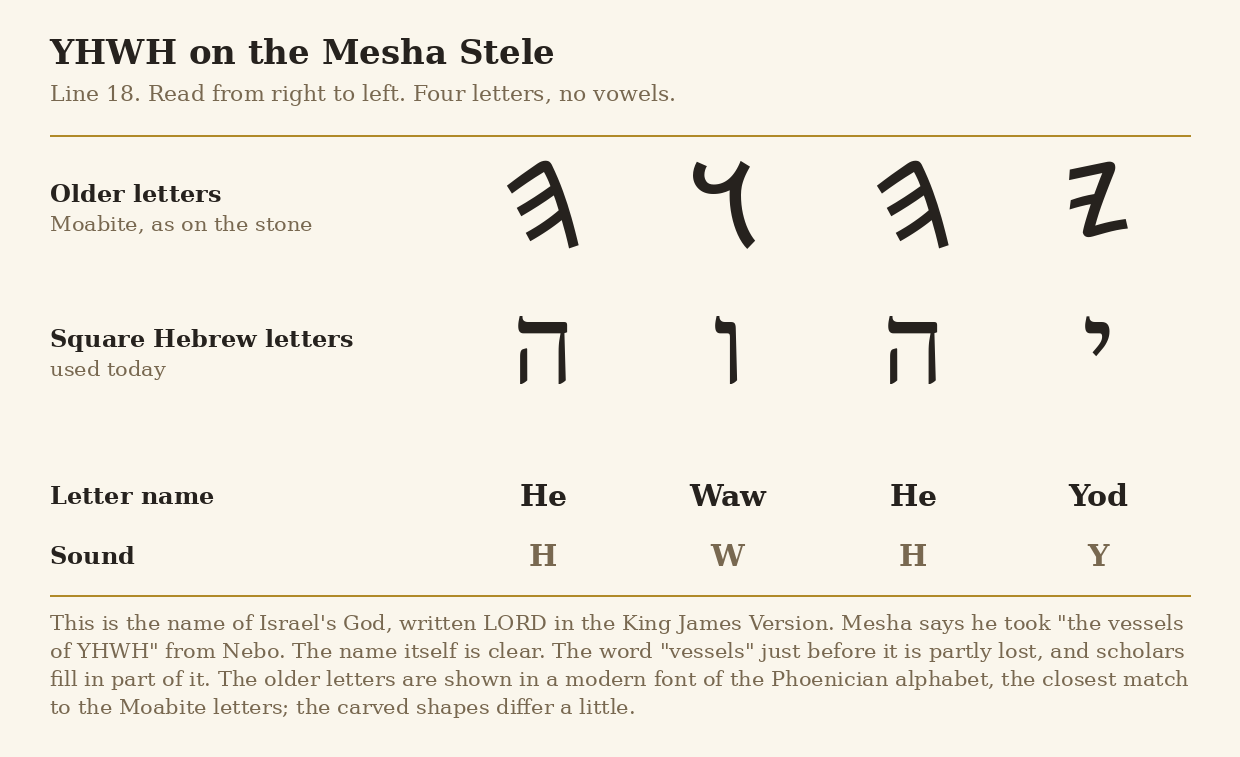
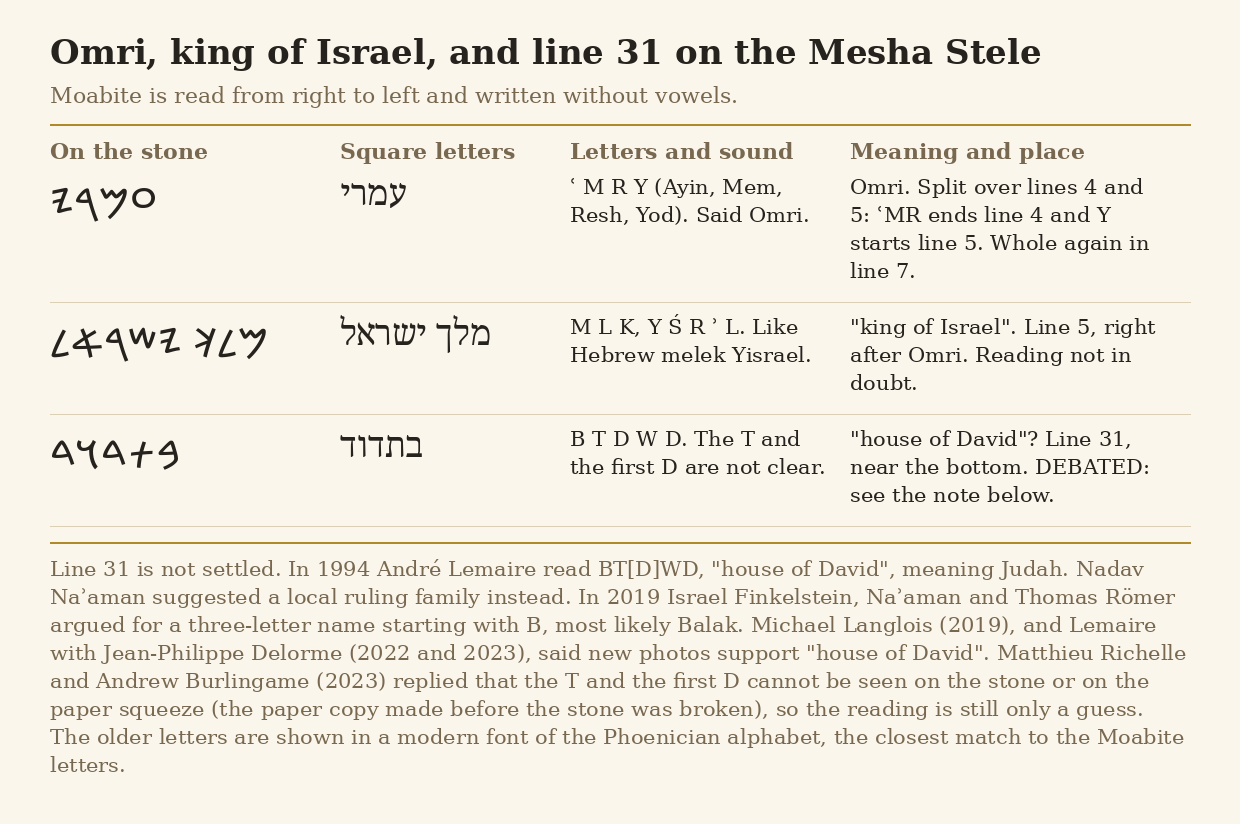
This stone of black basalt (a hard volcanic rock) is a stele, an upright stone slab with writing on it. It was set up by Mesha, king of Moab, the same king named in 2 Kings 3:4. In one modern translation Mesha says: "Omri was the king of Israel, and he oppressed Moab for many days, for Kemoš was angry with his land. And his son succeeded him, and he said ... 'I will oppress Moab!'" Kemoš (Kemosh) is the god of Moab, the Chemosh of the Bible. Mesha says Kemosh helped him win back towns from Israel. At Nebo he says: "And from there, I took the vessels of YHWH, and I hauled them before the face of Kemoš." YHWH is the Hebrew name of Israel's God, written LORD in the King James Version. Part of the word "vessels" is damaged and filled in by scholars, but the name YHWH can be read. The drawings below mark YHWH in line 18 and "Omri king of Israel" in lines 4 and 5, and the charts show the letters.
A drawing of the Mesha Stele by Mark Lidzbarski, published in 1898 (a drawing, not a photo), showing lines 17 to 19. The writing reads from right to left. The yellow box, added for this page, marks YHWH, the name of Israel's God (LORD in the King James Version), in line 18. The small dot inside the box at the lower left is a word divider. Just to the right of the box are the last two letters of the word "vessels". In this drawing the shaded areas are pieces of the original stone and the white areas are parts rebuilt in the 1870s. The name sits on a shaded area, on original stone, while the end of "vessels" is on the rebuilt part. A close-up photo of the stone in the Louvre agrees: the end of "vessels" is cut into a smooth rebuilt strip, with the rough original stone to its left. Mark Lidzbarski (1898), via Wikimedia Commons, Public domain.The same 1898 drawing by Mark Lidzbarski, lines 3 to 6. The yellow boxes, added for this page, mark "Omri king of Israel". The name Omri is split over two lines: its first three letters are at the far left end of line 4, and its last letter starts line 5 at the far right, followed by "king of Israel". The letters at the end of line 4 are on a white area, part of the 1870s rebuild. The end of the name and "king of Israel" in line 5 are on a shaded area, an original piece of the stone. The name Omri appears whole again in line 7, which is not shown here. Mark Lidzbarski (1898), via Wikimedia Commons, Public domain.Chart of the four letters of YHWH as written on the Mesha Stele, in the older letters and in the square Hebrew letters used today, with each letter's name and sound. Chart made for this page, free to reuse.Chart of "Omri" and "king of Israel", and of the debated reading "house of David" in line 31. The note sets out who reads line 31 which way; that reading is not settled. Chart made for this page, free to reuse.
Where it is today
Louvre Museum, Paris (AO 5066), in the Sully wing, Room 303. A copy is shown at the Jordan Archaeological Museum in Amman.
Date
Usually dated about 840 BC. The Louvre gives about 830 to 805 BC.
Why this label: The stone is accepted as genuine by nearly all scholars. It names Mesha king of Moab, Omri king of Israel, the men of Gad (in the Bible, one of Israel's tribes) and the God of Israel, all matching names in the Bible.
Good to know
Broken and rebuilt: The missionary Frederick Klein saw the stone whole at Dhiban in August 1868. Agents of the French scholar Charles Clermont-Ganneau made a paper squeeze, a wet paper pressing that copies the letters, and tore it off the stone, still damp, in seven pieces when a fight broke out. In 1869 local Bedouin heated the stone in a fire, poured cold water on it and broke it apart. Accounts of the reason differ. Some say it was to defy the Turkish (Ottoman) officials who wanted it handed over. Others say they hoped to use the pieces as charms. Clermont-Ganneau later gathered the pieces and rebuilt the stone. The pieces hold about 613 of its roughly 1,000 letters, and the rest was filled in from the squeeze.
Differences from the Bible: The Bible says Moab rebelled after Ahab died (2 Kings 1:1; 3:5). The stone says Israel held Medeba in Omri's days and "half the days of his son", which some read as "grandson". The stone does not mention the joint attack by Israel, Judah and Edom in 2 Kings 3. Each side tells the story in its own favour.
House of David: Line 31 is badly damaged. In 1994 André Lemaire read it as "House of David", meaning Judah, with one letter missing. Others read it differently; Nadav Na'aman, for example, proposed the name of a local ruling family.
Balak proposal: In 2019 Israel Finkelstein, Nadav Na'aman and Thomas Römer argued from photos of the squeeze that the name there has three letters starting with B, most likely Balak. Matthieu Richelle replied that a mark they relied on is on the modern plaster, not on the original stone. Michael Langlois and later André Lemaire with Jean-Philippe Delorme used new imaging to support "House of David". Matthieu Richelle and Andrew Burlingame say the reading is still uncertain. The reading of line 31 is not settled.
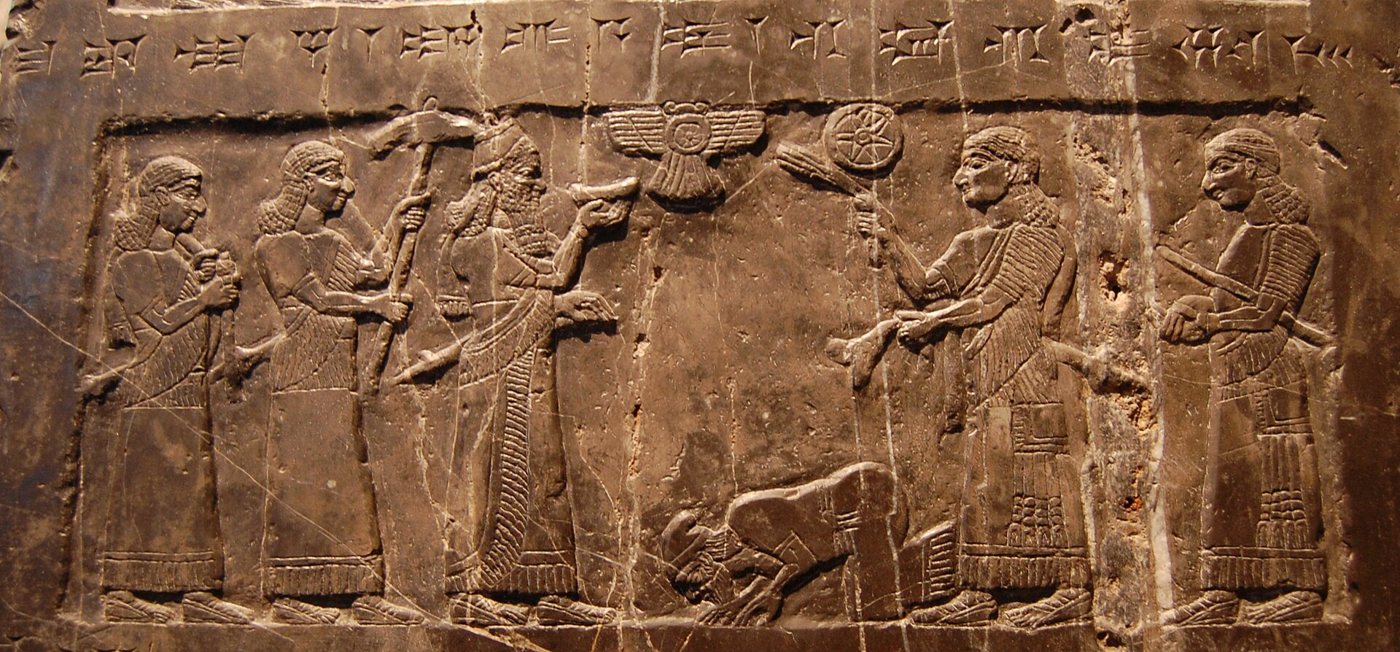
ConfirmedThe Black Obelisk panel showing a man bowing to the ground before Shalmaneser the Third. Steven G. Johnson, via Wikimedia Commons, CC BY-SA 3.0.
And Jehu the son of Nimshi shalt thou anoint to be king over Israel: and Elisha the son of Shaphat of Abelmeholah shalt thou anoint to be prophet in thy room.
1 Kings 19:16, KJV
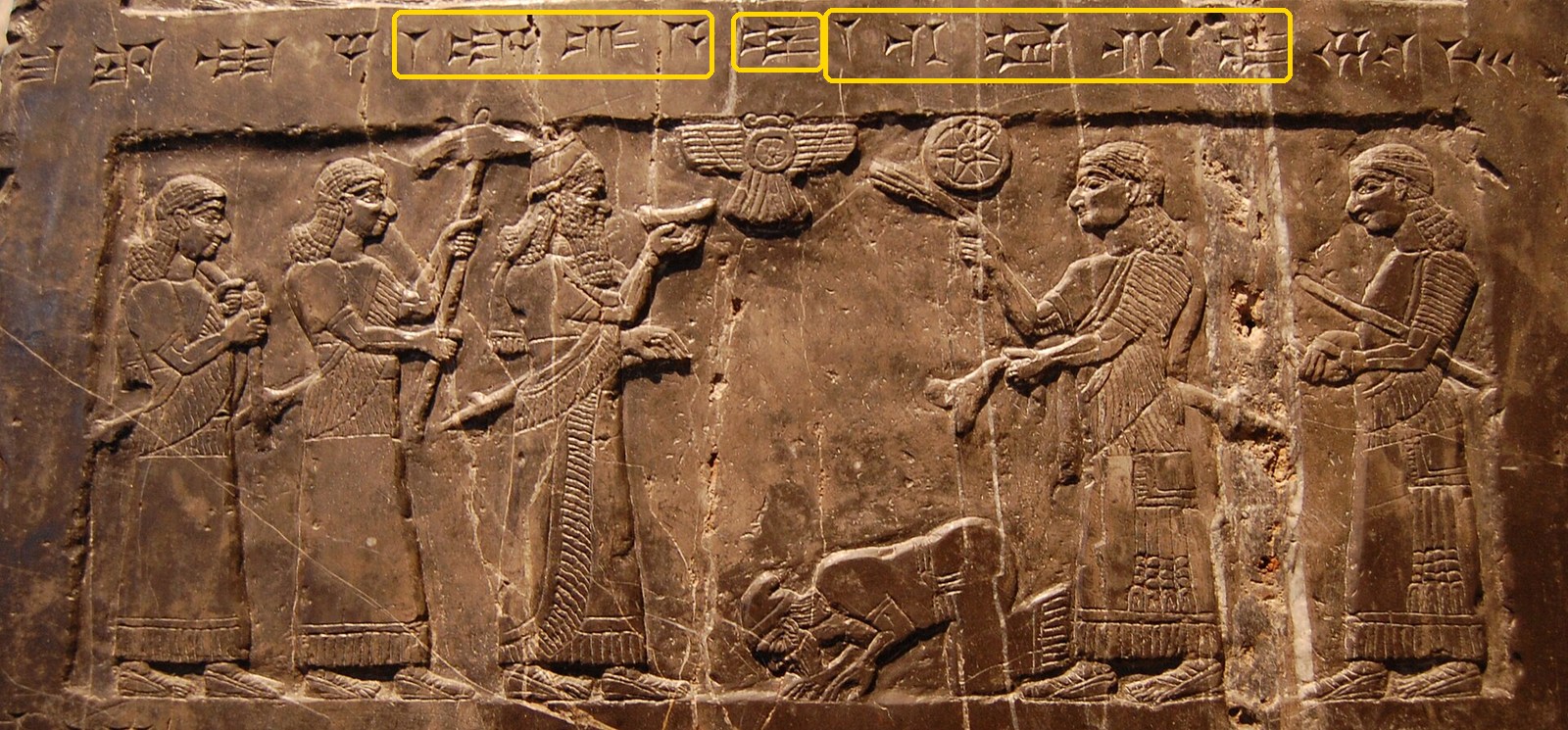
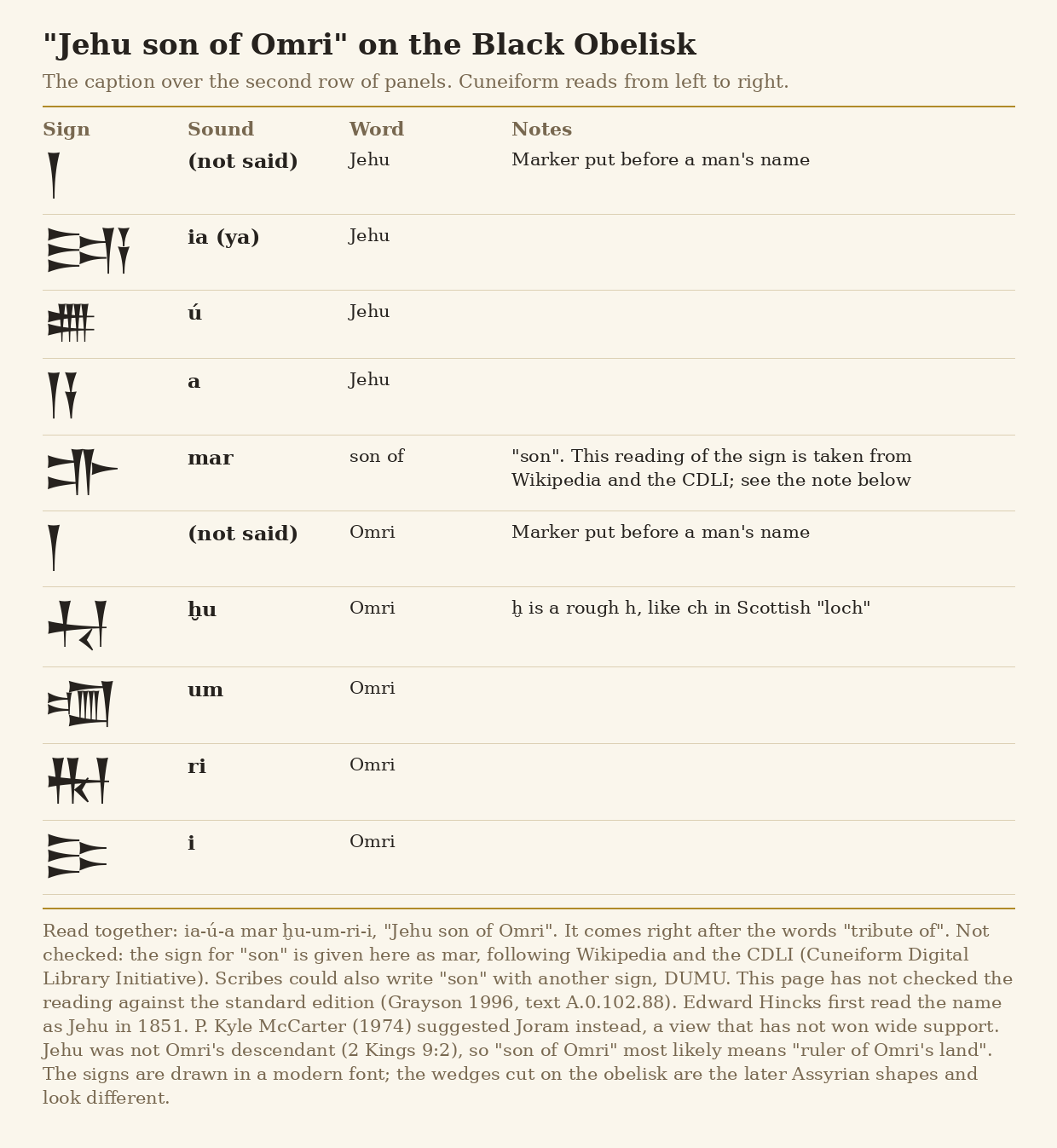
This four-sided pillar of black limestone, about 2 metres tall, praises the Assyrian king Shalmaneser the Third. It has 20 carved panels in 5 rows, showing 5 rulers or lands bringing tribute, that is, payment to a stronger king. The second row shows a man bowing to the ground before the king, with men behind him carrying goods. The cuneiform (wedge-shaped writing) caption above it reads, in Daniel Luckenbill's translation (1926): "The tribute of Jehu, son of Omri; I received from him silver, gold, a golden saplu-bowl, a golden vase with pointed bottom, golden tumblers, golden buckets, tin, a staff for a king, (and) wooden puruhtu." The cuneiform spells the names Ia-ú-a and Hu-um-ri-i. Saplu is a kind of bowl. The meaning of puruhtu is uncertain; some translate it "spears". Jehu is the king who took Israel's throne in 2 Kings 9 to 10. The photos below mark the words "Jehu son of Omri" in the caption, and the chart shows each sign.
Close-up photo of the cuneiform caption on the original Black Obelisk in the British Museum, above the panel of the man bowing before the king. Cuneiform reads from left to right. The yellow boxes, added for this page, mark the three parts of the phrase: Ia-ú-a (Jehu), mar (son of) and Ḫu-um-ri-i (Omri). The Omri box also takes in the small upright wedge placed before a man's name. The same wedge before Jehu's name falls just outside the left edge of this close-up. The sign for "son" is read mar, as in Wikipedia and the CDLI. Scribes could also write "son" with a different sign, DUMU, and the standard printed edition (Grayson 1996) was not available to check which sign the obelisk has. Steven G. Johnson, via Wikimedia Commons, CC BY-SA 3.0.Photo of the original panel on the Black Obelisk: a man bows to the ground before the Assyrian king Shalmaneser the Third. The band of cuneiform along the top is the caption. The yellow boxes, added for this page, mark "Jehu" (with the wedge placed before a man's name), "son of" and "Omri" (with its wedge). The words just before them say "tribute of". Steven G. Johnson, via Wikimedia Commons, CC BY-SA 3.0.Chart of the cuneiform signs for "Jehu son of Omri" (ia-ú-a mar ḫu-um-ri-i), with each sign's sound. The note marks the reading of the sign for "son" as not checked against the standard edition. Chart made for this page, free to reuse.
Where it is today
British Museum, London (museum number 118885), in the Assyrian sculpture gallery (Room 6). It was found by Austen Henry Layard at Nimrud (Calah, see the Genesis page) in 1846. Casts are shown in several other museums.
Date
Made about 825 BC. Other inscriptions of Shalmaneser date Jehu's tribute to about 841 BC.
Why this label: The obelisk is genuine, and its caption names "Ia-ú-a, son of Omri" at the time the Bible places Jehu. Most scholars accept this as the Bible's Jehu, though a few have questioned it.
Good to know
Jehu or envoy: The caption names Jehu, but the bowing man may be Jehu himself or an official sent in his place. Scholar Irit Ziffer argues the figures are a standard picture of a bowing ruler, not a likeness of a real person. If it is Jehu, it is often called the only known picture of an Israelite or Judean king made in his own lifetime.
The name: Edward Hincks first linked the name to Jehu in 1851, and most scholars follow him. P. Kyle McCarter suggested in 1974 that the name stands for Joram (Jehoram) instead, but this has not won wide support.
Son of Omri: In the Bible Jehu is the son of Jehoshaphat, son of Nimshi (2 Kings 9:2), and he wiped out the family of Ahab, Omri's son. The Assyrians called Israel the "House of Omri" no matter who ruled it, so "son of Omri" most likely means "ruler of Omri's land".
Not in the Bible: The Bible does not mention Jehu paying tribute to Assyria. It does say that in his days Hazael of Damascus took land from Israel (2 Kings 10:32-33), which may explain why Jehu sought Assyria's favour.
The Samaria ivories and the Bible's "houses of ivory"
1 Kings 22:39 · Amos 3:15 · Amos 6:4
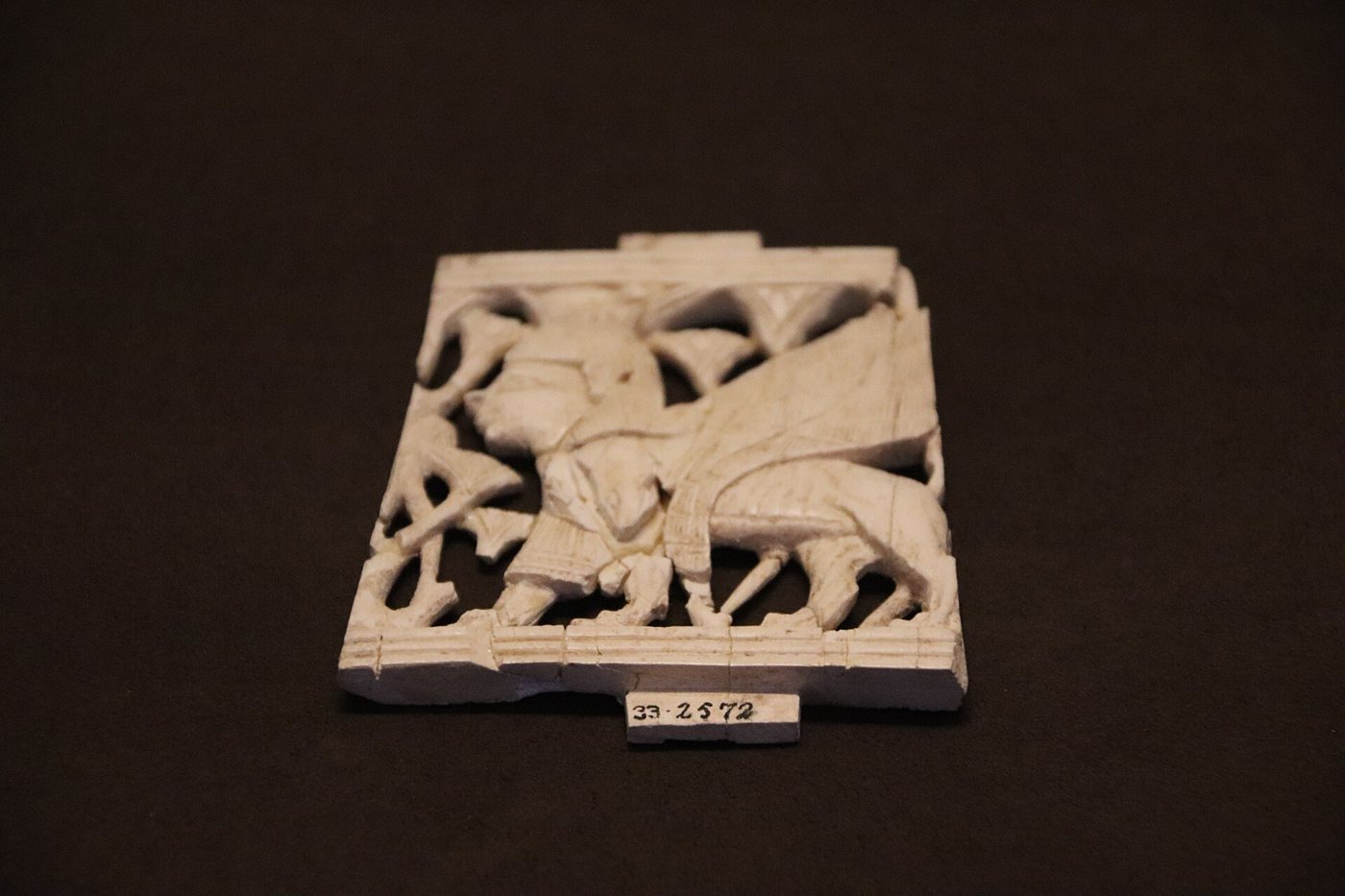
ConfirmedCarved ivory furniture inlay from Samaria, 800s to 700s BC. Gary Todd, via Wikimedia Commons, CC0.
Now the rest of the acts of Ahab, and all that he did, and the ivory house which he made, and all the cities that he built, are they not written in the book of the chronicles of the kings of Israel?
1 Kings 22:39, KJV
The Bible says Ahab built an "ivory house", and the prophet Amos later condemned the "houses of ivory" and "beds of ivory" of the rich in Samaria. Digs at Samaria, the capital of the northern kingdom of Israel, between 1908 and 1935 found thousands of pieces of carved ivory near the royal palace. Most are small panels once set into wooden furniture. They show sphinxes (creatures with a lion's body and a human head), lions, lotus flowers, Egyptian gods such as the child Horus, and a woman looking out of a window. An "ivory house" most likely meant a palace with furniture and panels decorated with ivory, not a building made of ivory.
Where it is today
A selection is on display at the Israel Museum, Jerusalem (Israel Antiquities Authority collection). Other pieces are held elsewhere, including some lent by the Palestine Exploration Fund to the British Museum, London.
Date
About 900 to 700 BC (9th to 8th century BC).
Why this label: The ivories are real and come from Israel's royal capital at Samaria in the period of its kings, matching the ivory luxury the Bible describes there. No single piece can be tied to Ahab himself.
Good to know
Dating question: Most pieces were found in later rubbish and fill near the palace, not in the palace rooms, so they are dated by their style. Some scholars think they more likely come from the 8th century BC, the time of Jeroboam the Second and Amos, rather than from Ahab's reign. So the finds fit the Bible's picture of ivory at Samaria, but they do not show which pieces, if any, were in Ahab's own house.
Phoenician or Israelite: The style is Phoenician (from the coast of today's Lebanon), with strong Egyptian themes. Early scholars saw them as foreign work. Pieces of raw, uncarved tusk were also found, so many were probably made at Samaria, by Israelite or travelling Phoenician or Aramean craftsmen.
How many: The excavators' 1938 report described only about 200 items. A current catalogue project at the University of Bern counts over 12,000 items, many of them small fragments.
Mount Carmel and the Muhraqa, the traditional place of Elijah's sacrifice
1 Kings 18:19-20 · 1 Kings 18:38 · 1 Kings 18:40
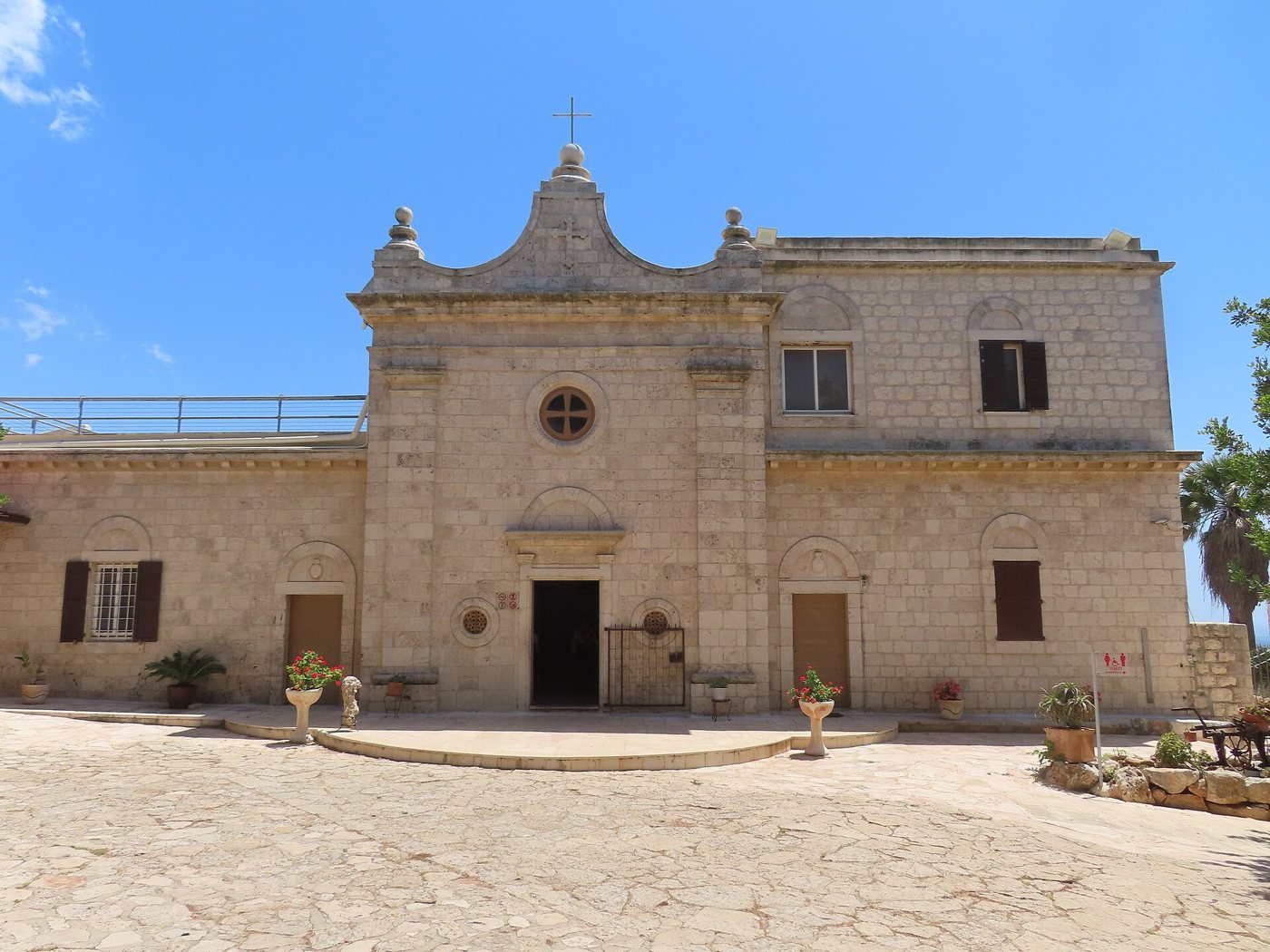
Traditional siteThe Carmelite monastery at the Muhraqa on Mount Carmel. Fallaner, via Wikimedia Commons, CC BY-SA 4.0.
Then the fire of the LORD fell, and consumed the burnt sacrifice, and the wood, and the stones, and the dust, and licked up the water that was in the trench.
1 Kings 18:38, KJV
In 1 Kings 18 Elijah calls the people of Israel and the prophets of Baal to Mount Carmel to see which God will answer by fire. Mount Carmel is a long range of hills running southeast from the coast at Haifa, and the Bible does not say which point on it was used. A small Carmelite monastery called the Muhraqa (Arabic for "the burning") stands on a peak on the southeastern part of the range, about 474 metres above sea level. It looks down over the Jezreel Valley and the Kishon stream, where 1 Kings 18:40 says the prophets of Baal were killed.
Where it is today
Muhraqa monastery, Keren HaCarmel, on the southeastern Carmel range, northern Israel, a few kilometres from Yokneam and Daliyat al-Karmel. It is cared for by the Carmelites, a Catholic order of friars named after Mount Carmel, and is open to visitors; check opening times before a visit.
Date
The event is set in the reign of Ahab, in the 9th century BC. The present monastery was begun in the 1860s and its main building was finished in 1883.
Why this label: Mount Carmel itself is certain, but there is no inscription or dig that points to this exact spot. The site was chosen by tradition because it fits the story well.
Good to know
Why this spot: The peak has a wide view, and a spring nearby could have supplied the water poured on Elijah's altar. Supporters also point to its view toward the sea, where Elijah's servant looked for the rain cloud. Others note that in 1 Kings 18:42-43 the servant had to go up again from the place where Elijah prayed before he could see the sea. That may point to a spot without a sea view, and the Bible does not say the prayer and the sacrifice happened at the same place.
History of the tradition: The Jewish traveller Benjamin of Tudela, in the 12th century AD, wrote that the ruined altar Elijah repaired could still be seen on top of the mountain, but he may have meant the western end of the range near Haifa. The Arabic name Muhraqa, "the burning", is taken to recall the burnt sacrifice. The Carmelites bought the land in the mid-1800s and built a chapel there in the 1860s.
What you see: The altar of 12 rough stones inside the church and the statue of Elijah in the courtyard (made in 1958, replacing an earlier statue brought in 1914) are modern. They are not ancient remains.
Baal on Carmel: A Greek inscription found on Carmel and published in 1952 reads "To Heliopolitan Zeus of Carmel", that is, the Zeus of Heliopolis (Baalbek in Lebanon), a Greek name for the storm god Baal. It shows that a storm god of the Baal type was still worshipped on the mountain in the 2nd century AD, long after Elijah's time.
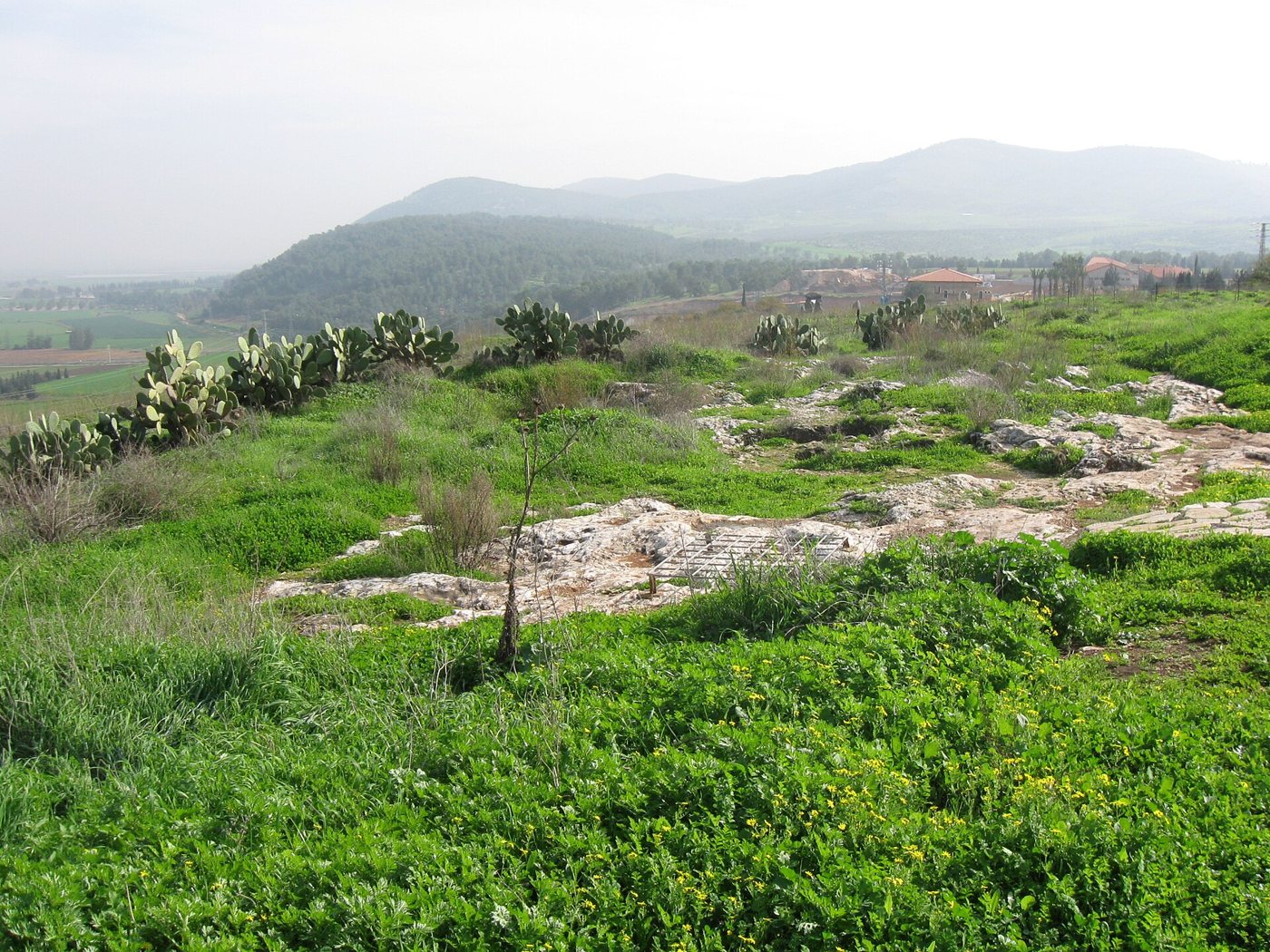
ConfirmedTel Jezreel, looking east toward Mount Gilboa. Wikimedia Commons user Ori~, Free to use with credit (Commons Attribution licence).
And it came to pass after these things, that Naboth the Jezreelite had a vineyard, which was in Jezreel, hard by the palace of Ahab king of Samaria.
1 Kings 21:1, KJV
Jezreel is where Ahab wanted Naboth's vineyard "hard by the palace" (1 Kings 21), where Jehu threw Joram's body into Naboth's field, and where Jezebel was thrown from a window (2 Kings 9). The ruins lie on a tell, a mound built up from the layers of a town, at Tel Jezreel. From 1990 to 1996 David Ussishkin of Tel Aviv University and John Woodhead of the British School of Archaeology in Jerusalem dug there. They found a large walled rectangle with towers, a gate and a dry moat, but no ordinary houses inside, which suggests a military or royal centre. A newer team led by Norma Franklin and Jennie Ebeling found a large winery cut into the bedrock at the foot of the hill. They first spotted it in a 2012 survey and dug it from 2013.
Where it is today
Tel Jezreel, in the eastern Jezreel Valley, northern Israel.
Date
People lived on and around the hill from before 4000 BC. The royal enclosure belongs to the time of Israel's kings, in the 9th or 8th century BC.
Why this label: The place is certain: the name Jezreel survived in the later Arabic village name Zir'in on the same hill, and the site fits the Bible's setting. So far no inscription naming Ahab, Naboth or Jezebel has been reported from the site.
Good to know
Dating the enclosure: Ussishkin and Woodhead dated the enclosure to the family of Omri and Ahab, partly based on the Bible's account, and linked a burnt layer to an attack by the Arameans of Damascus. The newer team thinks the enclosure may be slightly later, and that the burning was too small to mark the end of the whole site. They suggest an older building on the edge of the hill may belong to Ahab's time.
The winery: It has a treading floor and two rock-cut vats, each over 1 metre deep. A visiting expert thought it was from the Iron Age, possibly the 10th or 9th century BC. But in 2020 Norma Franklin told the Jerusalem Post that it cannot yet be dated with certainty. A soil study found that a plot of land at Jezreel is well suited to growing grapes. Franklin's view is that whoever wrote the story knew of this winery. It cannot show that a man named Naboth owned it.
Other verses: Jezreel is also named in 1 Kings 18:45-46, where Elijah ran ahead of Ahab to Jezreel, and in Hosea 1:4.
The seal inscribed "yzbl", often linked to Jezebel
1 Kings 16:31 · 1 Kings 21:8
Disputed
So she wrote letters in Ahab's name, and sealed them with his seal, and sent the letters unto the elders and to the nobles that were in his city, dwelling with Naboth.
1 Kings 21:8, KJV
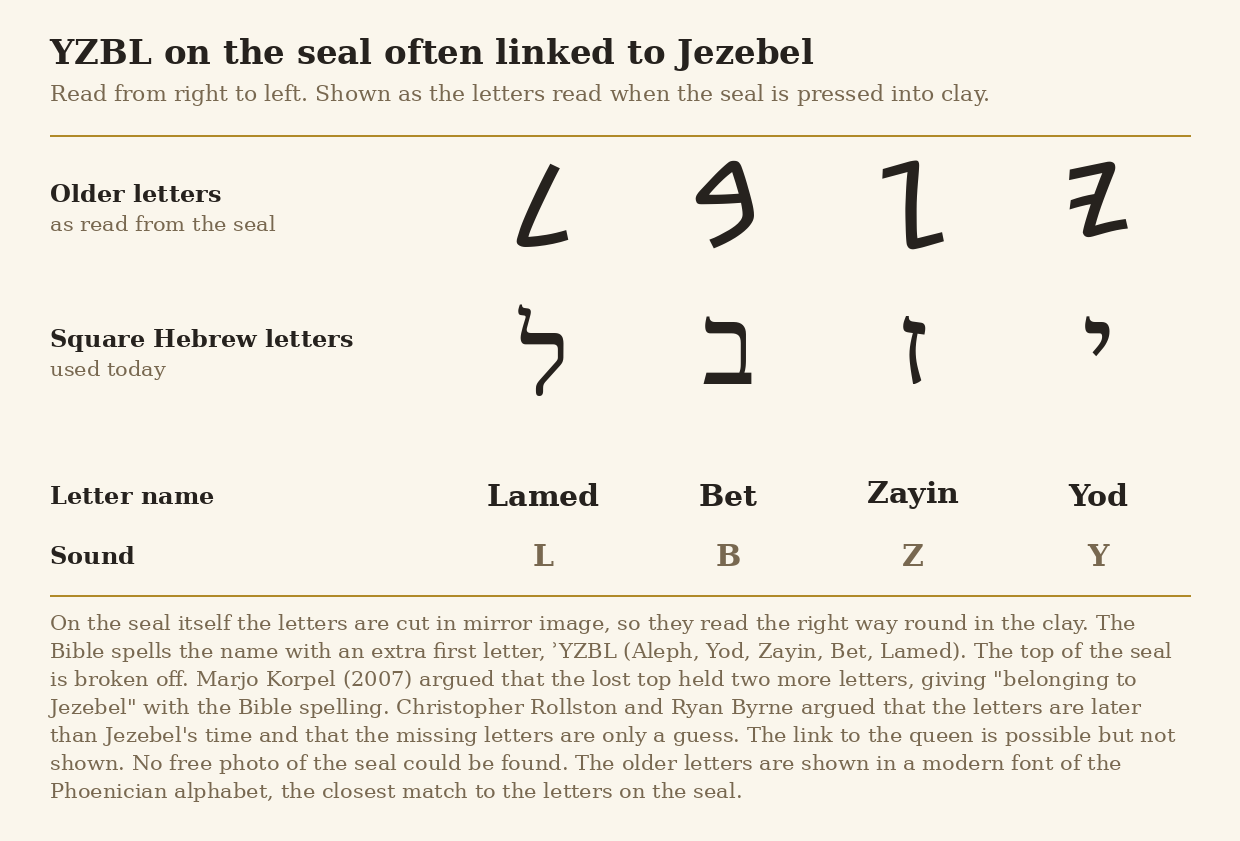
This is a large seal of grey opal (a semi-precious stone), used to stamp a mark into clay or wax. It is carved with Egyptian-style symbols such as a winged sphinx, a falcon, cobras, a winged sun and a lotus flower. Between the symbols are four letters of the old Hebrew and Phoenician alphabet: yzbl. In the Hebrew Bible Jezebel's name is spelled 'yzbl, with an extra first letter (aleph), and the top of the seal is broken off. In 2007 Marjo Korpel of Utrecht University argued that the broken top once held two more letters, which would make it read "belonging to Jezebel" with the name spelled as in the Bible, and that the seal's size and royal symbols show it belonged to Queen Jezebel, Ahab's wife. The chart below shows the four letters on the seal.
Chart of the four letters YZBL on the seal, in the older letters and in the square Hebrew letters used today, shown as they read when the seal is pressed into clay. The note explains the Bible's spelling with an extra first letter, the broken top, and the debate over whether the seal was the queen's. Chart made for this page, free to reuse.
Where it is today
Israel Museum, Jerusalem (Israel Antiquities Authority collection, number IDAM 65-321).
Date
Dated by its letter shapes to the 9th or 8th century BC; scholars disagree which.
Why this label: The seal's place of origin is unknown, the name on it is not spelled as in the Bible, and expert scholars disagree on whether its letters are early enough for Jezebel's lifetime.
Good to know
Unknown origin: Nahman Avigad published the seal in 1964. It came through the antiquities market, not from a recorded dig. Avigad raised the question of whether it was the queen's. Writers since then disagree on how far he went: a 2007 newspaper report quotes him as saying "we can never know for sure", while Ryan Byrne says he rejected the link.
Korpel view: Korpel points to the royal symbols, the large size and the rarity of the name. She also argued that the missing letters fit the broken space.
Doubting view: The script expert Christopher Rollston argued that the letters must be later than the 9th century BC, so after Jezebel's lifetime. Archaeologist Ryan Byrne agreed and repeated Rollston's other points: the missing letters are only a guess, the seal gives no title or father's name (Byrne grants that this silence proves nothing either way), and no seal with a personal name has yet been found in a securely dated 9th-century dig.
Other experts: Hershel Shanks, editor of Biblical Archaeology Review, reported that Joseph Naveh said he could not tell the date from the letters, and that several other script experts said they could be from the 9th century. The seal may be linked to Jezebel, but this has not been shown.
 LearnAboutHim